4I0P | pdb_00004i0p

HLA-DO in complex with HLA-DM


Experimental Data Snapshot

  • Method: X-RAY DIFFRACTION
  • Resolution: 3.20 Å
  • R-Value Free: 
    0.242 (Depositor), 0.248 (DCC) 
  • R-Value Work: 
    0.188 (Depositor), 0.197 (DCC) 
  • R-Value Observed: 
    0.191 (Depositor) 

Starting Models: experimental
View more details

wwPDB Validation 3D Report Full Report

Validation slider image for 4I0P

Ligand Structure Quality Assessment 


This is version 1.4 of the entry. See complete history

Literature

HLA-DO acts as a substrate mimic to inhibit HLA-DM by a competitive mechanism.

Guce, A.I.Mortimer, S.E.Yoon, T.Painter, C.A.Jiang, W.Mellins, E.D.Stern, L.J.

(2013) Nat Struct Mol Biol 20: 90-98

  • DOI: https://doi.org/10.1038/nsmb.2460
  • Primary Citation Related Structures: 
    4I0P

  • PubMed Abstract: 

    Mammalian class II major histocompatibility (MHCII) proteins bind peptide antigens in endosomal compartments of antigen-presenting cells. The nonclassical MHCII protein HLA-DM chaperones peptide-free MHCII, protecting it against inactivation, and catalyzes peptide exchange on loaded MHCII. Another nonclassical MHCII protein, HLA-DO, binds HLA-DM and influences the repertoire of peptides presented by MHCII proteins. However, the mechanism by which HLA-DO functions is unclear. Here we have used X-ray crystallography, enzyme kinetics and mutagenesis approaches to investigate human HLA-DO structure and function. In complex with HLA-DM, HLA-DO adopts a classical MHCII structure, with alterations near the α subunit's 3₁₀ helix. HLA-DO binds to HLA-DM at the same sites implicated in MHCII interaction, and kinetic analysis showed that HLA-DO acts as a competitive inhibitor. These results show that HLA-DO inhibits HLA-DM function by acting as a substrate mimic, and the findings also limit the possible functional roles for HLA-DO in antigen presentation.


  • Organizational Affiliation
    • Department of Pathology, University of Massachusetts Medical School, Worcester, Massachusetts, USA.

Macromolecule Content 

  • Total Structure Weight: 172.08 kDa 
  • Atom Count: 12,064 
  • Modeled Residue Count: 1,488 
  • Deposited Residue Count: 1,498 
  • Unique protein chains: 4

Macromolecules

Find similar proteins by:|  3D Structure
Entity ID: 1
MoleculeChains  Sequence LengthOrganismDetailsImage
HLA-DMA protein
A, E
188Homo sapiensMutation(s): 0 
Gene Names: 3108HLA-DMA
UniProt
Find proteins for Q6ICR9 (Homo sapiens)
Explore Q6ICR9 
Go to UniProtKB:  Q6ICR9
Entity Groups
Sequence Clusters30% Identity50% Identity70% Identity90% Identity95% Identity100% Identity
UniProt GroupQ6ICR9
Glycosylation
Glycosylation Sites: 1
Sequence Annotations
Expand
Reference Sequence
Find similar proteins by:|  3D Structure
Entity ID: 2
MoleculeChains  Sequence LengthOrganismDetailsImage
HLA class II histocompatibility antigen, DM beta chain
B, F
191Homo sapiensMutation(s): 0 
Gene Names: 3109DMBHLA-DMBRING7
UniProt & NIH Common Fund Data Resources
Find proteins for P28068 (Homo sapiens)
Explore P28068 
Go to UniProtKB:  P28068
PHAROS:  P28068
GTEx:  ENSG00000242574 
Entity Groups
Sequence Clusters30% Identity50% Identity70% Identity90% Identity95% Identity100% Identity
UniProt GroupP28068
Sequence Annotations
Expand
Reference Sequence
Find similar proteins by:|  3D Structure
Entity ID: 3
MoleculeChains  Sequence LengthOrganismDetailsImage
HLA class II histocompatibility antigen, DO alpha chain
C, G
181Homo sapiensMutation(s): 0 
Gene Names: 3111HLA-DNAHLA-DOAHLA-DZA
UniProt & NIH Common Fund Data Resources
Find proteins for P06340 (Homo sapiens)
Explore P06340 
Go to UniProtKB:  P06340
PHAROS:  P06340
GTEx:  ENSG00000204252 
Entity Groups
Sequence Clusters30% Identity50% Identity70% Identity90% Identity95% Identity100% Identity
UniProt GroupP06340
Glycosylation
Glycosylation Sites: 2Go to GlyGen: P06340-1
Sequence Annotations
Expand
Reference Sequence
Find similar proteins by:|  3D Structure
Entity ID: 4
MoleculeChains  Sequence LengthOrganismDetailsImage
HLA class II histocompatibility antigen, DO beta chain
D, H
189Homo sapiensMutation(s): 0 
Gene Names: 3112HLA-DOB
UniProt & NIH Common Fund Data Resources
Find proteins for P13765 (Homo sapiens)
Explore P13765 
Go to UniProtKB:  P13765
PHAROS:  P13765
GTEx:  ENSG00000241106 
Entity Groups
Sequence Clusters30% Identity50% Identity70% Identity90% Identity95% Identity100% Identity
UniProt GroupP13765
Glycosylation
Glycosylation Sites: 1Go to GlyGen: P13765-1
Sequence Annotations
Expand
Reference Sequence

Small Molecules

Ligands 4 Unique
IDChains Name / Formula / InChI Key2D Diagram3D Interactions
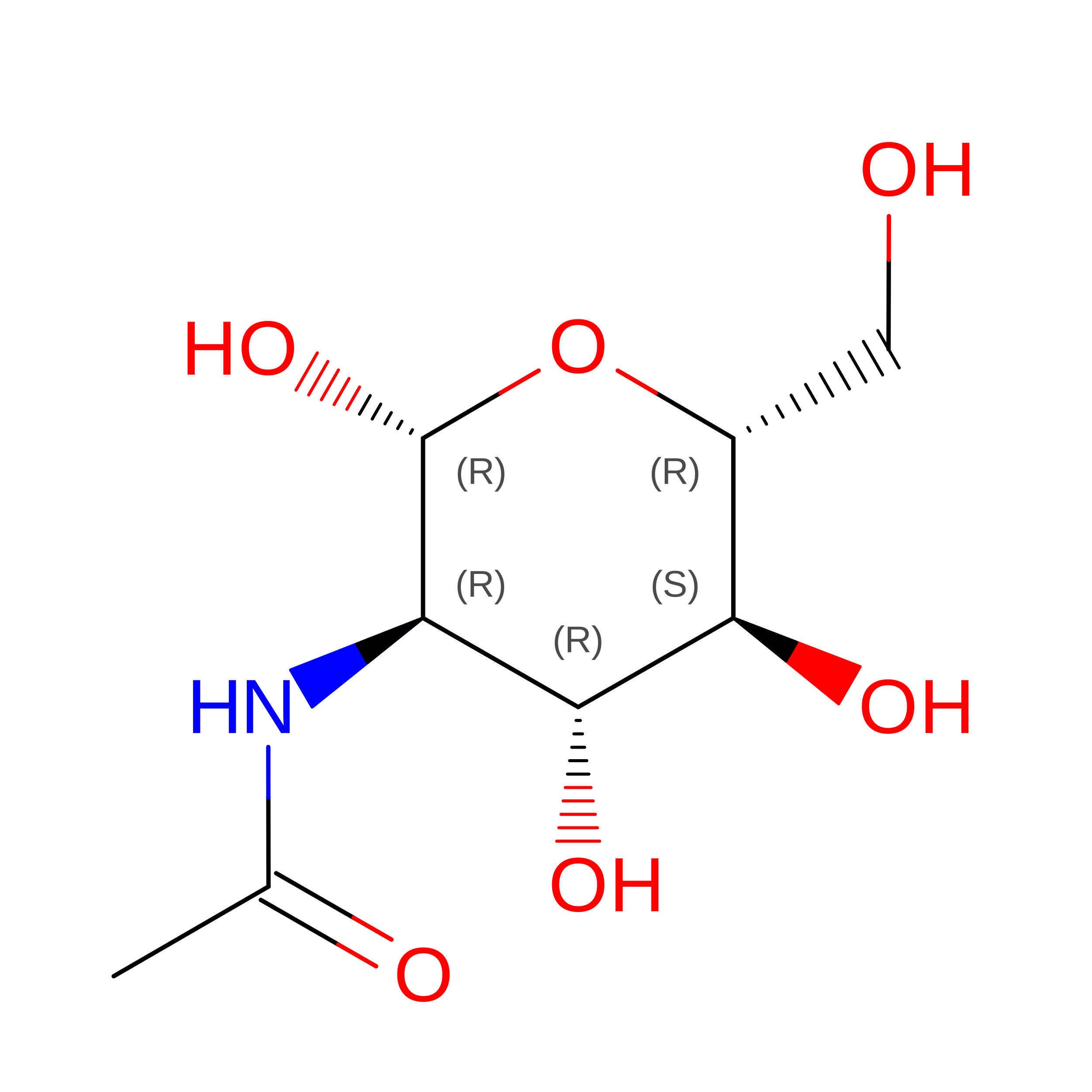
NAG

Query on NAG


Download:Ideal Coordinates CCD File
I [auth A]
J [auth C]
K [auth D]
M [auth E]
O [auth G]
I [auth A],
J [auth C],
K [auth D],
M [auth E],
O [auth G],
P [auth G],
Q [auth H]
2-acetamido-2-deoxy-beta-D-glucopyranose
C8 H15 N O6
OVRNDRQMDRJTHS-FMDGEEDCSA-N
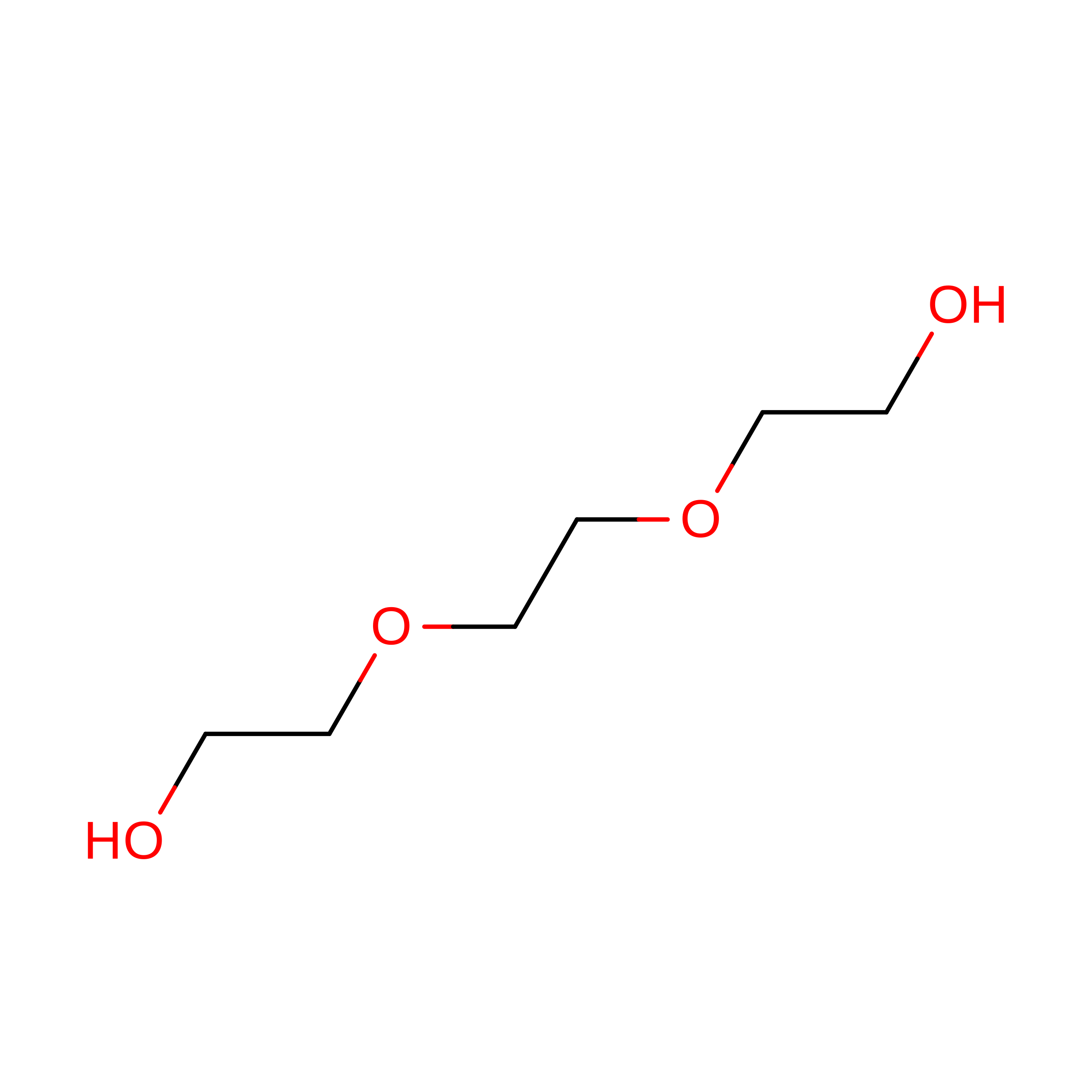
PGE

Query on PGE


Download:Ideal Coordinates CCD File
R [auth H]TRIETHYLENE GLYCOL
C6 H14 O4
ZIBGPFATKBEMQZ-UHFFFAOYSA-N
GOL

Query on GOL


Download:Ideal Coordinates CCD File
L [auth D],
N [auth F],
T [auth H]
GLYCEROL
C3 H8 O3
PEDCQBHIVMGVHV-UHFFFAOYSA-N
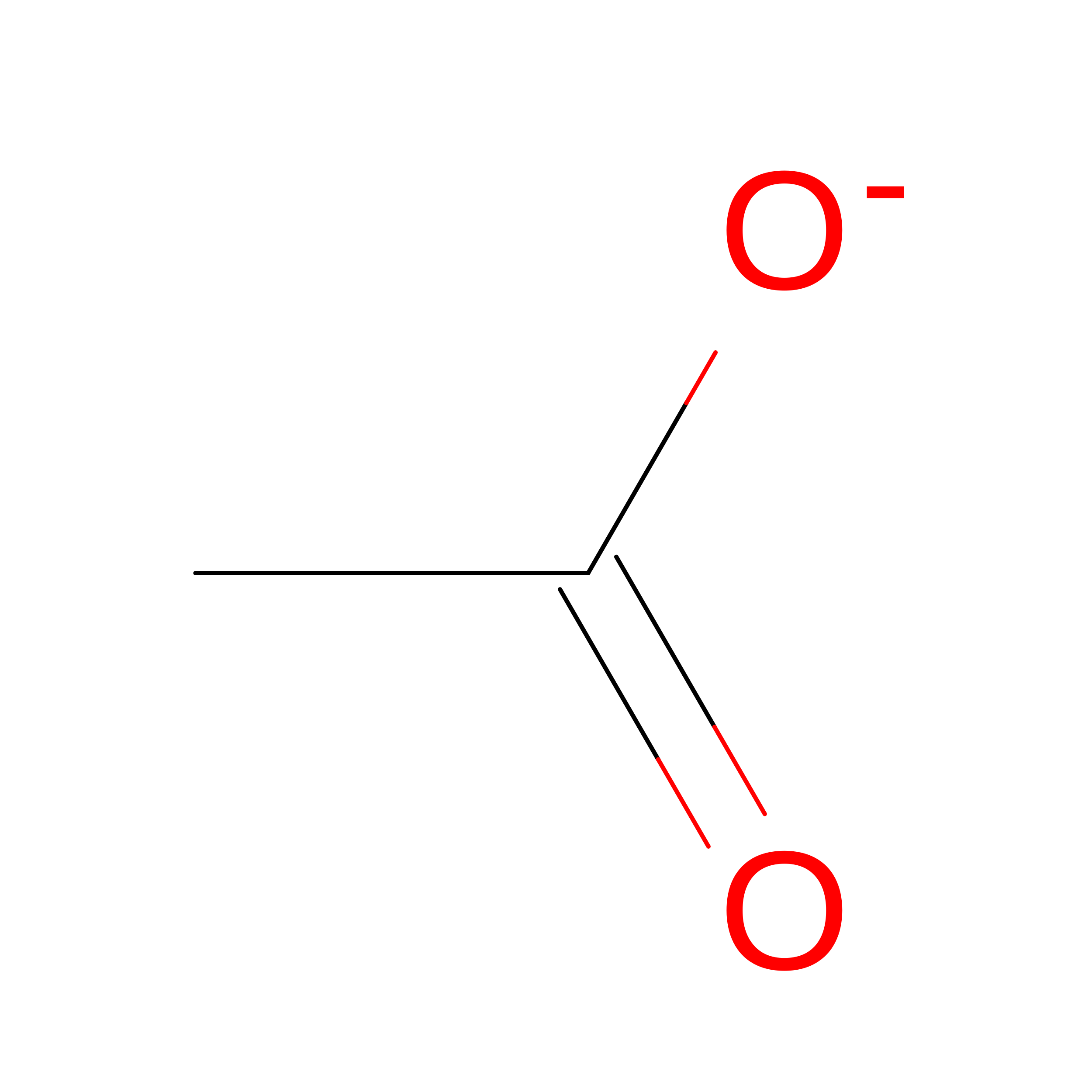
ACT

Query on ACT


Download:Ideal Coordinates CCD File
S [auth H]ACETATE ION
C2 H3 O2
QTBSBXVTEAMEQO-UHFFFAOYSA-M

Experimental Data & Validation

Experimental Data

  • Method: X-RAY DIFFRACTION
  • Resolution: 3.20 Å
  • R-Value Free:  0.242 (Depositor), 0.248 (DCC) 
  • R-Value Work:  0.188 (Depositor), 0.197 (DCC) 
  • R-Value Observed: 0.191 (Depositor) 
Space Group: P 1 21 1
Unit Cell:
Length ( Å )Angle ( ˚ )
a = 83.26α = 90
b = 147.1β = 106.49
c = 95.959γ = 90
Software Package:
Software NamePurpose
HKL-2000data collection
PHASERphasing
PHENIXrefinement
DENZOdata reduction
SCALEPACKdata scaling

Structure Validation

View Full Validation Report


Ligand Structure Quality Assessment 


Entry History 

Deposition Data

Revision History  (Full details and data files)

  • Version 1.0: 2012-12-26
    Type: Initial release
  • Version 1.1: 2013-01-16
    Changes: Database references
  • Version 1.2: 2020-07-29
    Type: Remediation
    Reason: Carbohydrate remediation
    Changes: Data collection, Derived calculations, Structure summary
  • Version 1.3: 2023-09-20
    Changes: Data collection, Database references, Refinement description, Structure summary
  • Version 1.4: 2024-11-27
    Changes: Structure summary