2VLJ | pdb_00002vlj

The Structural Dynamics and Energetics of an Immunodominant T-cell Receptor are Programmed by its Vbeta Domain


Experimental Data Snapshot

  • Method: X-RAY DIFFRACTION
  • Resolution: 2.40 Å
  • R-Value Free: 
    0.272 (Depositor), 0.261 (DCC) 
  • R-Value Work: 
    0.196 (Depositor), 0.192 (DCC) 
  • R-Value Observed: 
    0.200 (Depositor) 

wwPDB Validation 3D Report Full Report

Validation slider image for 2VLJ

This is version 1.2 of the entry. See complete history

Literature

The Structural Dynamics and Energetics of an Immunodominant T-Cell Receptor are Programmed by its Vbeta Domain

Ishizuka, J.Stewart-Jones, G.Van Der Merwe, A.Bell, J.Mcmichael, A.Jones, Y.

(2008) Immunity 28: 171

  • DOI: https://doi.org/10.1016/j.immuni.2007.12.018
  • Primary Citation Related Structures: 
    2VLJ, 2VLK, 2VLL, 2VLM, 2VLR

  • PubMed Abstract: 

    Immunodominant and public T cell receptor (TCR) usage is relatively common in many viral diseases yet surprising in the context of the large naive TCR repertoire. We examined the highly conserved Vbeta17:Valpha10.2 JM22 T cell response to the influenza matrix peptide (58-66)-HLA-A*0201 (HLA-A2-flu) through extensive kinetic, thermodynamic, and structural analyses. We found several conformational adjustments that accompany JM22-HLA-A2-flu binding and identified a binding "hotspot" within the Vbeta domain of the TCR. Within this hotspot, key germline-encoded CDR1 and CDR2 loop residues and a crucial but commonly coded residue in the hypervariable region of CDR3 provide the basis for the substantial bias in the selection of the germline-encoded Vbeta17 domain. The chances of having a substantial number of T cells in the naive repertoire that have HLA-A2-flu-specific Vbeta17 receptors may consequently be relatively high, thus explaining the immunodominant usage of this clonotype.


  • Organizational Affiliation
    • MRC Human Immunology Unit, Weatherall Institute of Molecular Medicine, University of Oxford, John Radcliffe Hospital, Oxford, UK.

Macromolecule Content 

  • Total Structure Weight: 94.61 kDa 
  • Atom Count: 6,946 
  • Modeled Residue Count: 824 
  • Deposited Residue Count: 830 
  • Unique protein chains: 5

Macromolecules

Find similar proteins by:|  3D Structure
Entity ID: 1
MoleculeChains  Sequence LengthOrganismDetailsImage
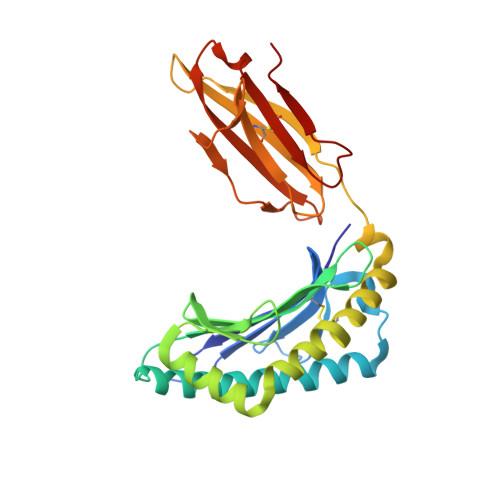
HLA CLASS I HISTOCOMPATIBILITY ANTIGEN, A-2 ALPHA CHAIN276Homo sapiensMutation(s): 0 
UniProt & NIH Common Fund Data Resources
Find proteins for P04439 (Homo sapiens)
Explore P04439 
Go to UniProtKB:  P04439
PHAROS:  P04439
GTEx:  ENSG00000206503 
Entity Groups
Sequence Clusters30% Identity50% Identity70% Identity90% Identity95% Identity100% Identity
UniProt GroupP04439
Sequence Annotations
Expand
Reference Sequence
Find similar proteins by:|  3D Structure
Entity ID: 2
MoleculeChains  Sequence LengthOrganismDetailsImage
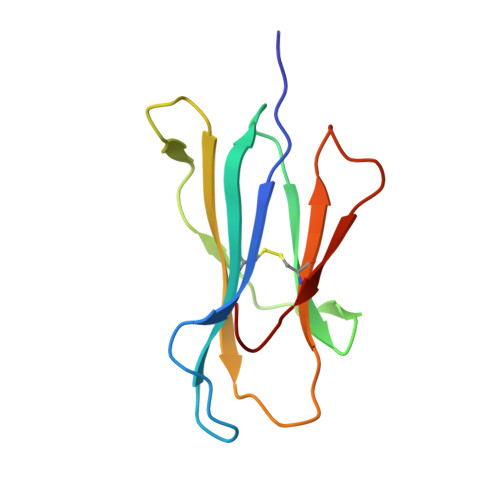
BETA-2-MICROGLOBULIN100Homo sapiensMutation(s): 0 
UniProt & NIH Common Fund Data Resources
Find proteins for P61769 (Homo sapiens)
Explore P61769 
Go to UniProtKB:  P61769
PHAROS:  P61769
GTEx:  ENSG00000166710 
Entity Groups
Sequence Clusters30% Identity50% Identity70% Identity90% Identity95% Identity100% Identity
UniProt GroupP61769
Sequence Annotations
Expand
Reference Sequence
Find similar proteins by:  Sequence   |   3D Structure  
Entity ID: 3
MoleculeChains  Sequence LengthOrganismDetailsImage
FLU MATRIX PEPTIDE9unidentified influenza virusMutation(s): 0 
Find similar proteins by:|  3D Structure
Entity ID: 4
MoleculeChains  Sequence LengthOrganismDetailsImage
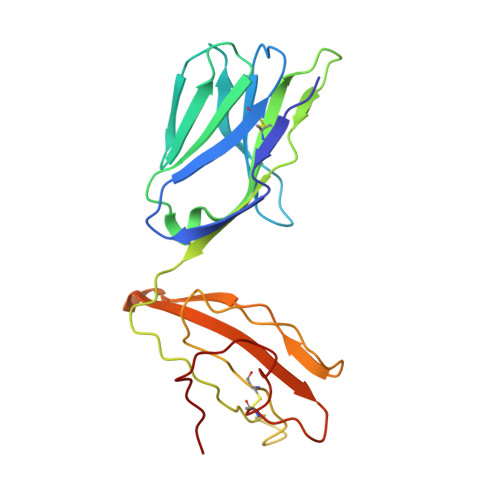
JM22 TCR ALPHA CHAIN201Homo sapiensMutation(s): 0 
UniProt & NIH Common Fund Data Resources
Find proteins for P01848 (Homo sapiens)
Explore P01848 
Go to UniProtKB:  P01848
PHAROS:  P01848
Entity Groups
Sequence Clusters30% Identity50% Identity70% Identity90% Identity95% Identity100% Identity
UniProt GroupP01848
Sequence Annotations
Expand
Reference Sequence
Find similar proteins by:|  3D Structure
Entity ID: 5
MoleculeChains  Sequence LengthOrganismDetailsImage
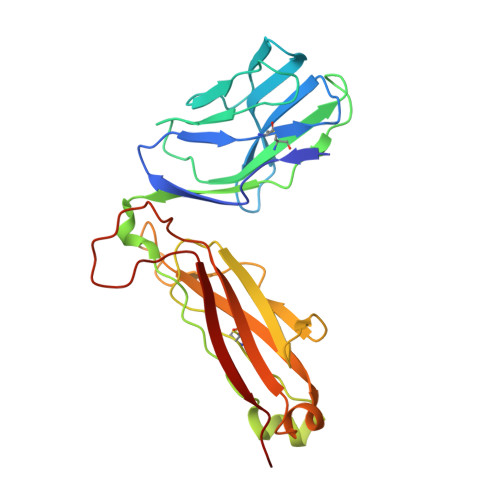
JM22 TCR BETA CHAIN244Homo sapiensMutation(s): 0 
UniProt
Find proteins for P01850 (Homo sapiens)
Explore P01850 
Go to UniProtKB:  P01850
Entity Groups
Sequence Clusters30% Identity50% Identity70% Identity90% Identity95% Identity100% Identity
UniProt GroupP01850
Sequence Annotations
Expand
Reference Sequence

Experimental Data & Validation

Experimental Data

  • Method: X-RAY DIFFRACTION
  • Resolution: 2.40 Å
  • R-Value Free:  0.272 (Depositor), 0.261 (DCC) 
  • R-Value Work:  0.196 (Depositor), 0.192 (DCC) 
  • R-Value Observed: 0.200 (Depositor) 
Space Group: C 1 2 1
Unit Cell:
Length ( Å )Angle ( ˚ )
a = 177.741α = 90
b = 48.384β = 109.97
c = 119.714γ = 90
Software Package:
Software NamePurpose
REFMACrefinement

Structure Validation

View Full Validation Report


Entry History 

Deposition Data

Revision History  (Full details and data files)

  • Version 1.0: 2008-01-22
    Type: Initial release
  • Version 1.1: 2011-07-13
    Changes: Advisory, Version format compliance
  • Version 1.2: 2024-11-06
    Changes: Data collection, Database references, Other, Structure summary