2GNU | pdb_00002gnu

The crystallization of reaction center from Rhodobacter sphaeroides occurs via a new route


Experimental Data Snapshot

  • Method: X-RAY DIFFRACTION
  • Resolution: 2.20 Å
  • R-Value Free: 
    0.246 (Depositor), 0.232 (DCC) 
  • R-Value Work: 
    0.200 (Depositor) 

Starting Model: experimental
View more details

wwPDB Validation 3D Report Full Report

Validation slider image for 2GNU

Ligand Structure Quality Assessment 


This is version 1.3 of the entry. See complete history

Literature

Lipidic sponge phase crystallization of membrane proteins

Wadsten, P.Woehri, A.B.Snijder, A.Katona, G.Gardiner, A.T.Cogdell, R.J.Neutze, R.Engstroem, S.

(2006) J Mol Biology 364: 44-53

  • DOI: https://doi.org/10.1016/j.jmb.2006.06.043
  • Primary Citation Related Structures: 
    2GNU

  • PubMed Abstract: 

    Bicontinuous lipidic cubic phases can be used as a host for growing crystals of membrane proteins. Since the cubic phase is stiff, handling is difficult and time-consuming. Moreover, the conventional cubic phase may interfere with the hydrophilic domains of membrane proteins due to the limited size of the aqueous pores. Here, we introduce a new crystallization method that makes use of a liquid analogue of the cubic phase, the sponge phase. This phase facilitates a considerable increase in the allowed size of aqueous domains of membrane proteins, and is easily generalised to a conventional vapour diffusion crystallisation experiment, including the use of nanoliter drop crystallization robots. The appearance of the sponge phase was confirmed by visual inspection, small-angle X-ray scattering and NMR spectroscopy. Crystals of the reaction centre from Rhodobacter sphaeroides were obtained by a conventional hanging-drop experiment, were harvested directly without the addition of lipase or cryoprotectant, and the structure was refined to 2.2 Angstroms resolution. In contrast to our earlier lipidic cubic phase reaction centre structure, the mobile ubiquinone could be built and refined. The practical advantages of the sponge phase make it a potent tool for crystallization of membrane proteins.


  • Organizational Affiliation
    • Department of Chemical and Biological Engineering, Pharmaceutical Technology, Chalmers University of Technology, Göteborg, Sweden.

Macromolecule Content 

  • Total Structure Weight: 99.45 kDa 
  • Atom Count: 7,045 
  • Modeled Residue Count: 816 
  • Deposited Residue Count: 816 
  • Unique protein chains: 3

Macromolecules

Find similar proteins by:|  3D Structure
Entity ID: 1
MoleculeChains  Sequence LengthOrganismDetailsImage
Reaction center protein H chainA [auth H]235Cereibacter sphaeroidesMutation(s): 0 
Membrane Entity: Yes 
UniProt
Find proteins for P0C0Y7 (Cereibacter sphaeroides)
Explore P0C0Y7 
Go to UniProtKB:  P0C0Y7
Entity Groups
Sequence Clusters30% Identity50% Identity70% Identity90% Identity95% Identity100% Identity
UniProt GroupP0C0Y7
Sequence Annotations
Expand
Reference Sequence
Find similar proteins by:|  3D Structure
Entity ID: 2
MoleculeChains  Sequence LengthOrganismDetailsImage
Reaction center protein L chainB [auth L]281Cereibacter sphaeroidesMutation(s): 0 
Membrane Entity: Yes 
UniProt
Find proteins for P0C0Y8 (Cereibacter sphaeroides)
Explore P0C0Y8 
Go to UniProtKB:  P0C0Y8
Entity Groups
Sequence Clusters30% Identity50% Identity70% Identity90% Identity95% Identity100% Identity
UniProt GroupP0C0Y8
Sequence Annotations
Expand
Reference Sequence
Find similar proteins by:|  3D Structure
Entity ID: 3
MoleculeChains  Sequence LengthOrganismDetailsImage
Reaction center protein M chainC [auth M]300Cereibacter sphaeroidesMutation(s): 0 
Membrane Entity: Yes 
UniProt
Find proteins for P0C0Y9 (Cereibacter sphaeroides)
Explore P0C0Y9 
Go to UniProtKB:  P0C0Y9
Entity Groups
Sequence Clusters30% Identity50% Identity70% Identity90% Identity95% Identity100% Identity
UniProt GroupP0C0Y9
Sequence Annotations
Expand
Reference Sequence

Small Molecules

Ligands 7 Unique
IDChains Name / Formula / InChI Key2D Diagram3D Interactions
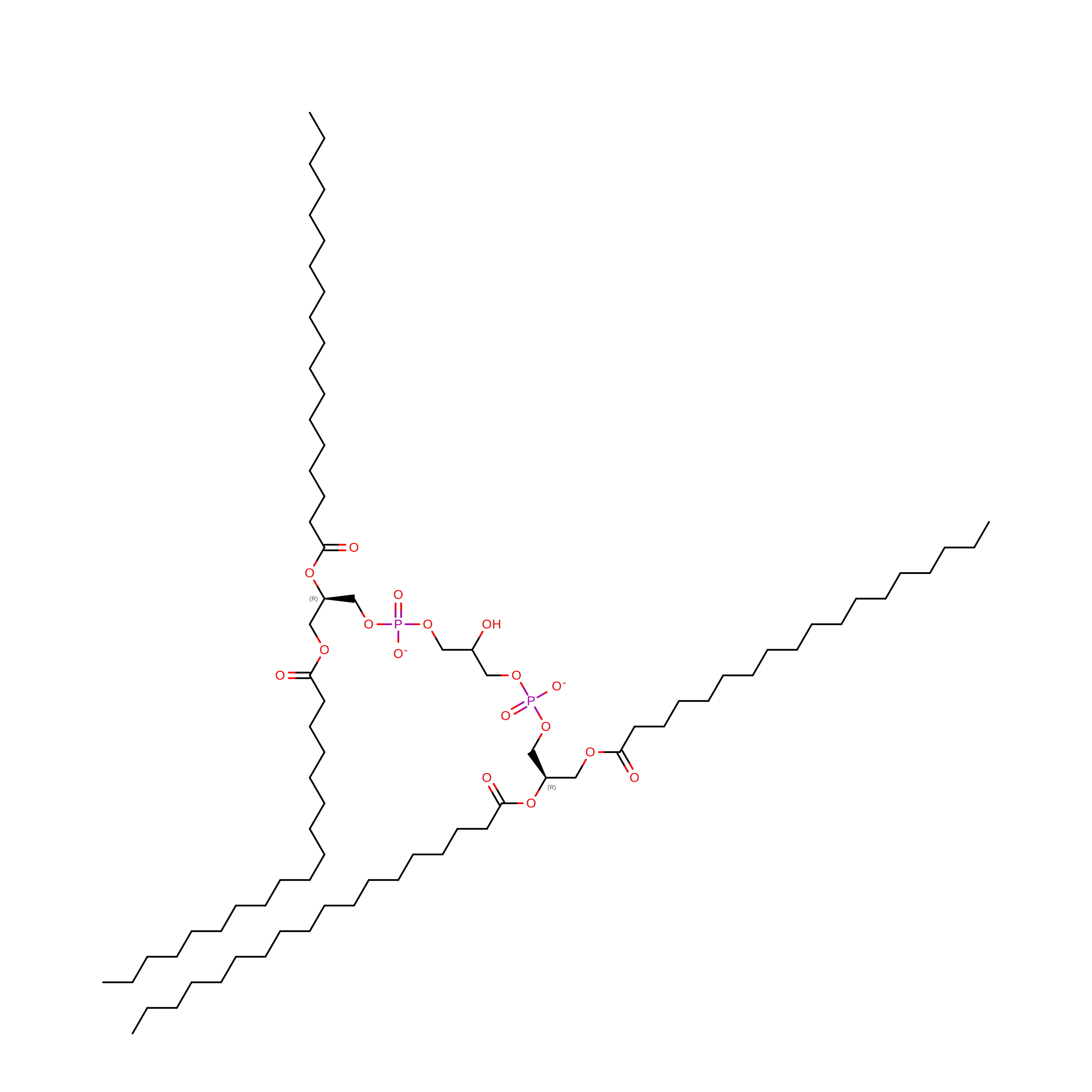
CDL

Query on CDL


Download:Ideal Coordinates CCD File
O [auth M]CARDIOLIPIN
C81 H156 O17 P2
XVTUQDWPJJBEHJ-KZCWQMDCSA-L
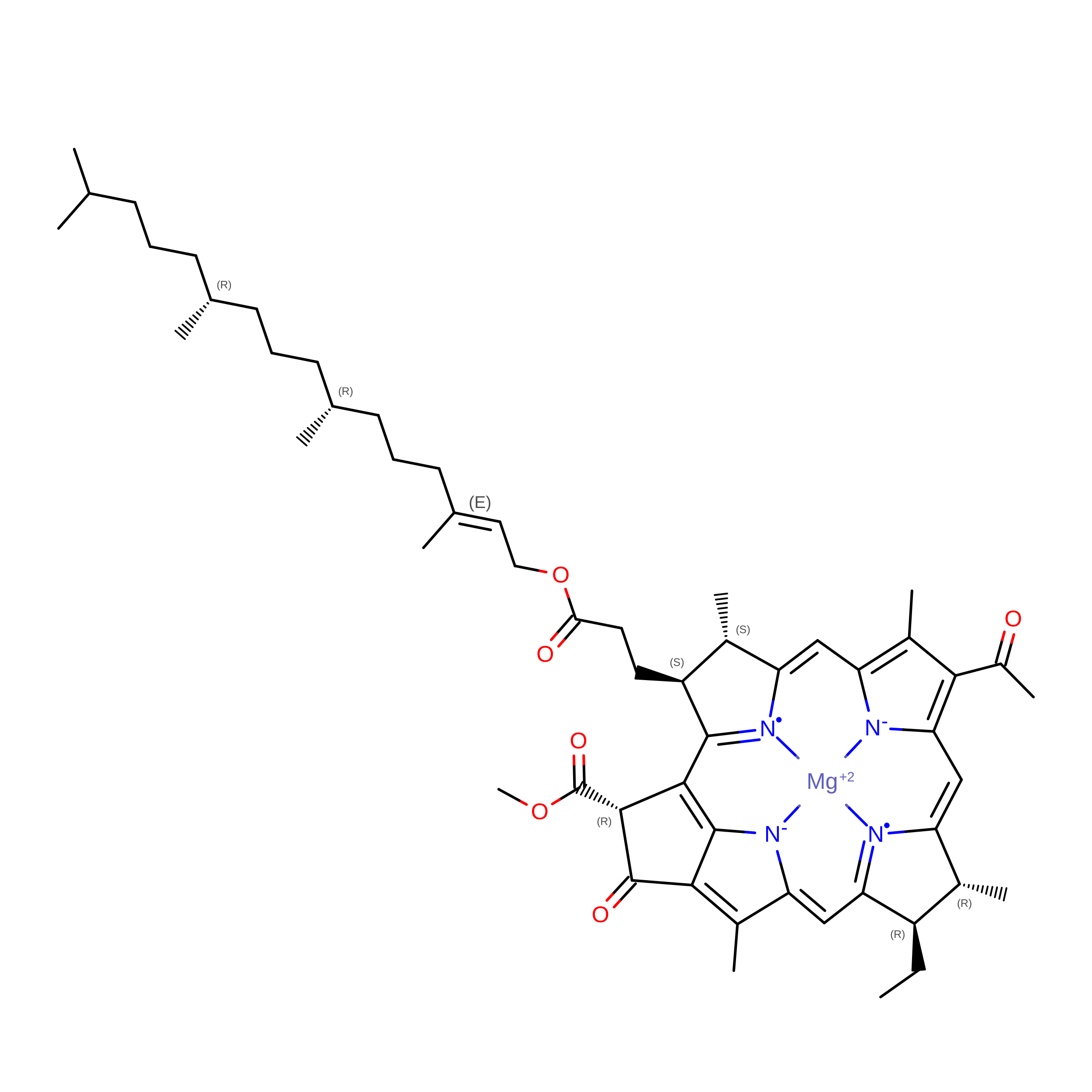
BCL

Query on BCL


Download:Ideal Coordinates CCD File
E [auth L],
F [auth L],
K [auth M],
L [auth M]
BACTERIOCHLOROPHYLL A
C55 H74 Mg N4 O6
DSJXIQQMORJERS-AGGZHOMASA-M
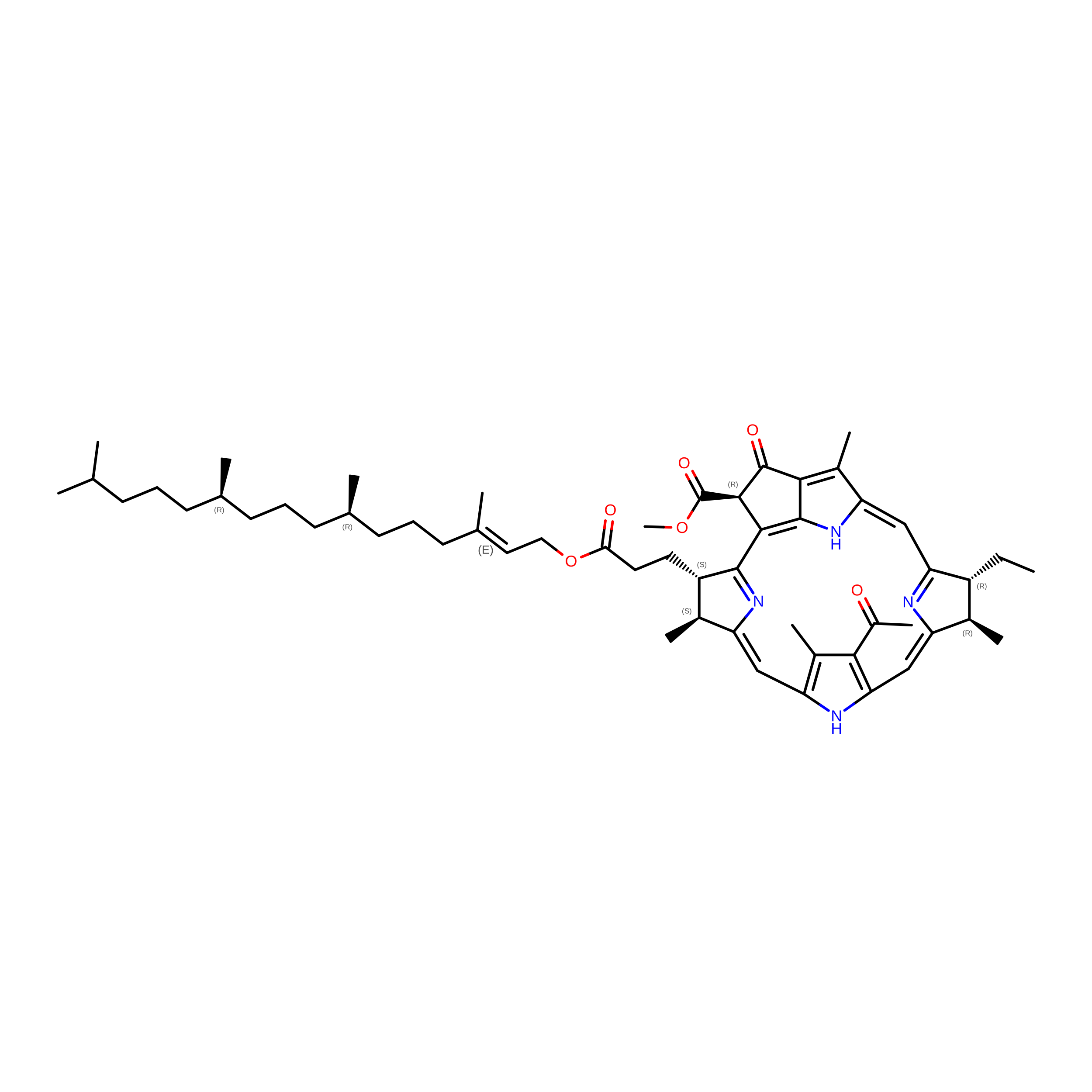
BPH

Query on BPH


Download:Ideal Coordinates CCD File
J [auth M],
M
BACTERIOPHEOPHYTIN A
C55 H76 N4 O6
KWOZSBGNAHVCKG-SZQBJALDSA-N
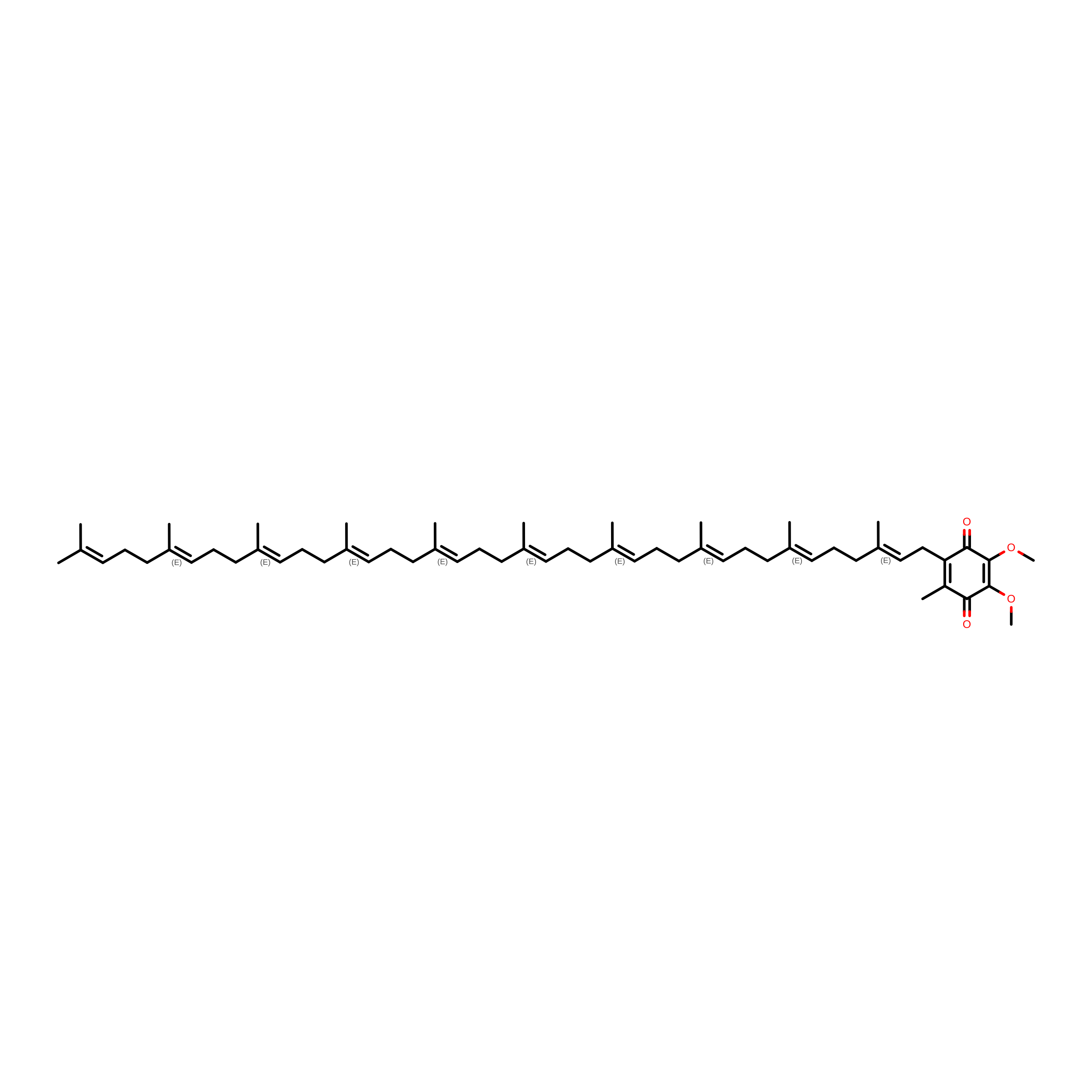
U10

Query on U10


Download:Ideal Coordinates CCD File
G [auth L],
N [auth M]
UBIQUINONE-10
C59 H90 O4
ACTIUHUUMQJHFO-UPTCCGCDSA-N
LDA

Query on LDA


Download:Ideal Coordinates CCD File
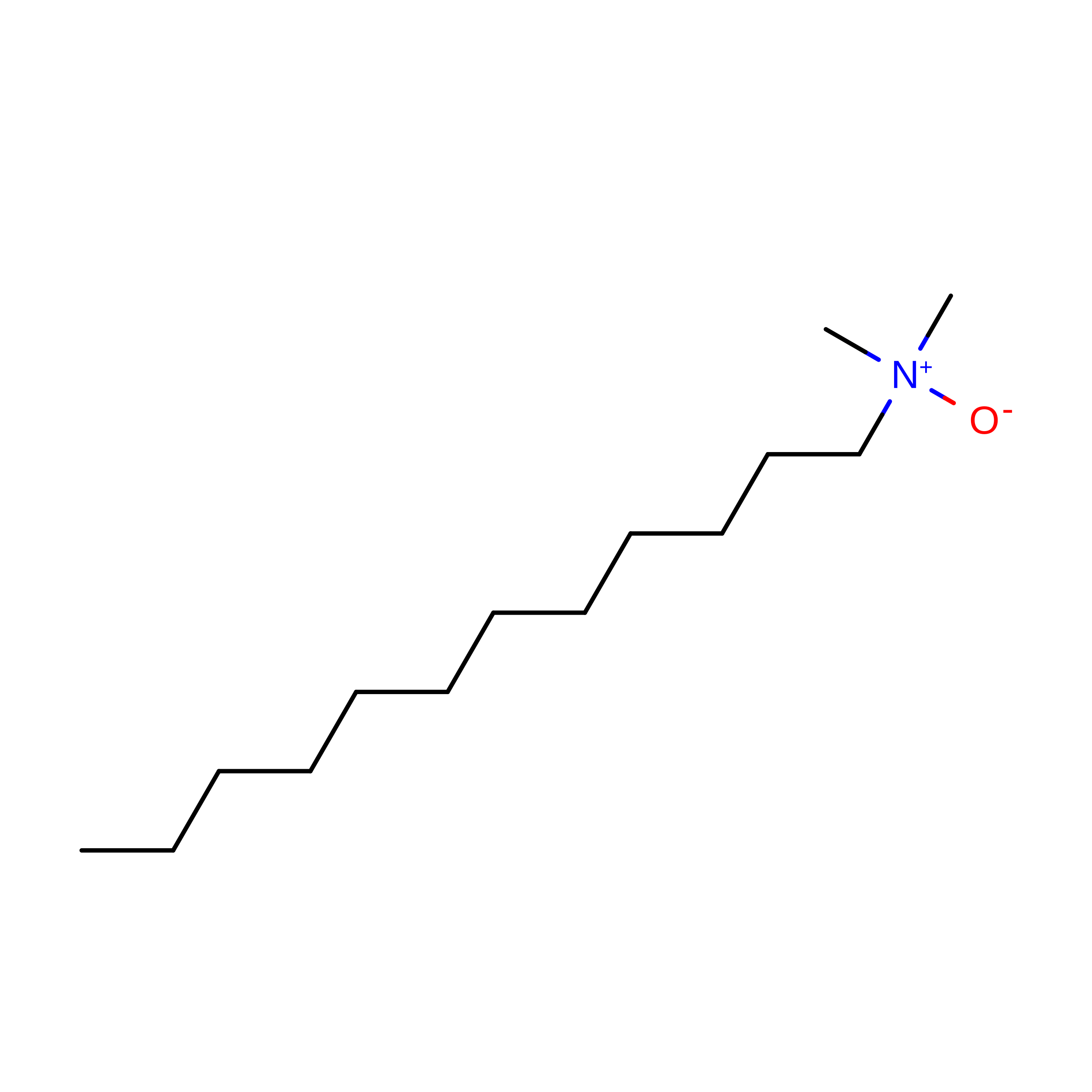
D [auth H]LAURYL DIMETHYLAMINE-N-OXIDE
C14 H31 N O
SYELZBGXAIXKHU-UHFFFAOYSA-N
FE2

Query on FE2


Download:Ideal Coordinates CCD File
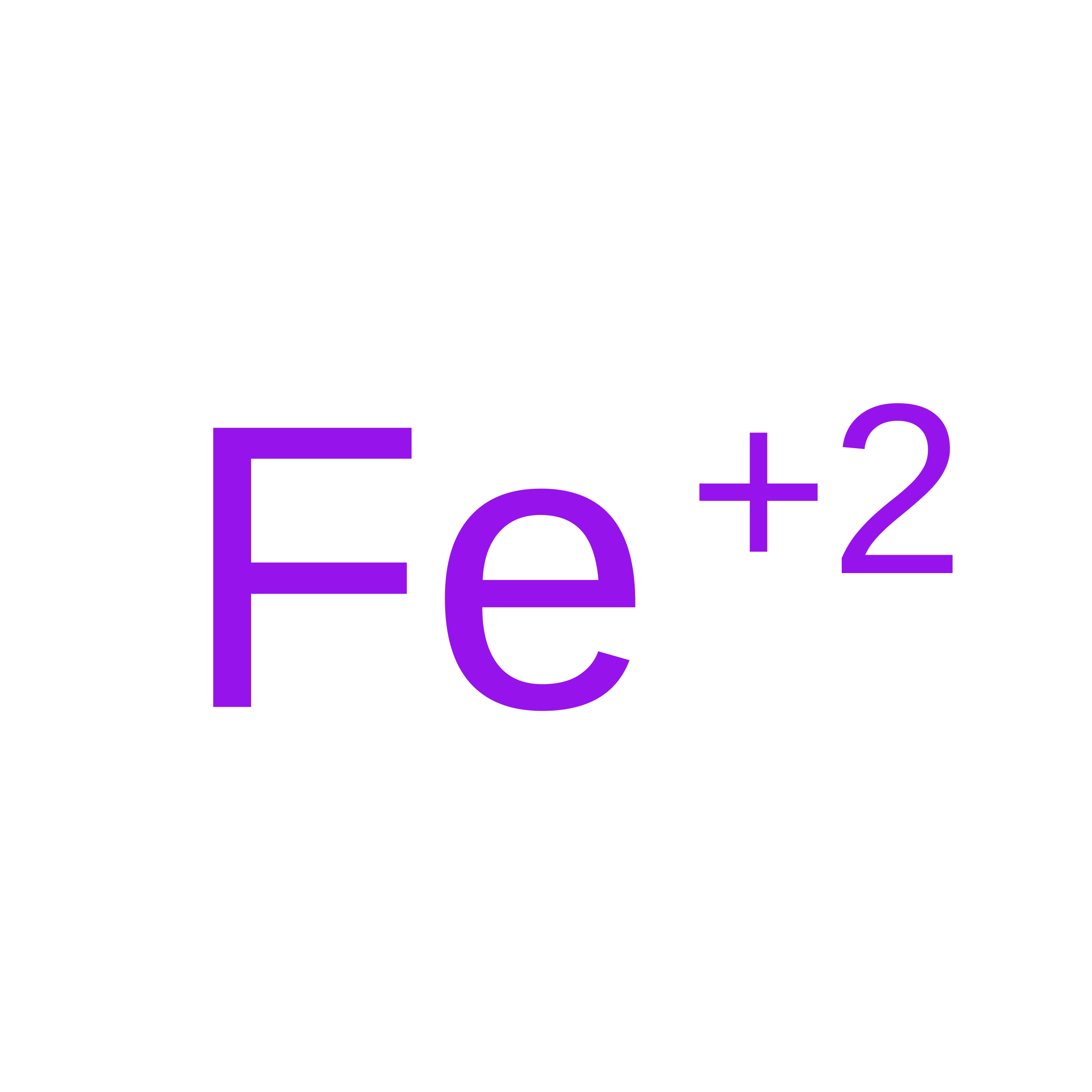
H [auth M]FE (II) ION
Fe
CWYNVVGOOAEACU-UHFFFAOYSA-N
CL

Query on CL


Download:Ideal Coordinates CCD File
I [auth M]CHLORIDE ION
Cl
VEXZGXHMUGYJMC-UHFFFAOYSA-M

Experimental Data & Validation

Experimental Data

  • Method: X-RAY DIFFRACTION
  • Resolution: 2.20 Å
  • R-Value Free:  0.246 (Depositor), 0.232 (DCC) 
  • R-Value Work:  0.200 (Depositor) 
Space Group: P 42 21 2
Unit Cell:
Length ( Å )Angle ( ˚ )
a = 100.422α = 90
b = 100.422β = 90
c = 235.412γ = 90
Software Package:
Software NamePurpose
SCALAdata scaling
MOLREPphasing
REFMACrefinement
PDB_EXTRACTdata extraction
MOSFLMdata reduction
CCP4data scaling

Structure Validation

View Full Validation Report


Ligand Structure Quality Assessment 


Entry History 

Deposition Data

Revision History  (Full details and data files)

  • Version 1.0: 2006-11-07
    Type: Initial release
  • Version 1.1: 2008-05-01
    Changes: Version format compliance
  • Version 1.2: 2011-07-13
    Changes: Non-polymer description, Version format compliance
  • Version 1.3: 2023-10-25
    Changes: Data collection, Database references, Derived calculations, Refinement description