1NLW | pdb_00001nlw

Crystal structure of Mad-Max recognizing DNA


Experimental Data Snapshot

  • Method: X-RAY DIFFRACTION
  • Resolution: 2.00 Å
  • R-Value Free: 
    0.324 (Depositor) 
  • R-Value Work: 
    0.264 (Depositor) 
  • R-Value Observed: 
    0.264 (Depositor) 

Starting Model: experimental
View more details

wwPDB Validation 3D Report Full Report

Validation slider image for 1NLW

This is version 1.5 of the entry. See complete history

Literature

X-ray structures of Myc-Max and Mad-Max recognizing DNA: Molecular bases of regulation by proto-oncogenic transcription factors

Nair, S.K.Burley, S.K.

(2003) Cell 112: 193-205

  • DOI: https://doi.org/10.1016/s0092-8674(02)01284-9
  • Primary Citation Related Structures: 
    1NKP, 1NLW

  • PubMed Abstract: 

    X-ray structures of the basic/helix-loop-helix/leucine zipper (bHLHZ) domains of Myc-Max and Mad-Max heterodimers bound to their common DNA target (Enhancer or E box hexanucleotide, 5'-CACGTG-3') have been determined at 1.9 A and 2.0 A resolution, respectively. E box recognition by these two structurally similar transcription factor pairs determines whether a cell will divide and proliferate (Myc-Max) or differentiate and become quiescent (Mad-Max). Deregulation of Myc has been implicated in the development of many human cancers, including Burkitt's lymphoma, neuroblastomas, and small cell lung cancers. Both quasisymmetric heterodimers resemble the symmetric Max homodimer, albeit with marked structural differences in the coiled-coil leucine zipper regions that explain preferential homo- and heteromeric dimerization of these three evolutionarily related DNA-binding proteins. The Myc-Max heterodimer, but not its Mad-Max counterpart, dimerizes to form a bivalent heterotetramer, which explains how Myc can upregulate expression of genes with promoters bearing widely separated E boxes.


  • Organizational Affiliation
    • Laboratories of Molecular Biophysics, Howard Hughes Medical Institute, The Rockefeller University, 1230 York Avenue, New York, NY 10021, USA.

Macromolecule Content 

  • Total Structure Weight: 59.2 kDa 
  • Atom Count: 4,212 
  • Modeled Residue Count: 378 
  • Deposited Residue Count: 384 
  • Unique protein chains: 2
  • Unique nucleic acid chains: 1

Macromolecules


Find similar proteins by:|  3D Structure
Entity ID: 2
MoleculeChains  Sequence LengthOrganismDetailsImage
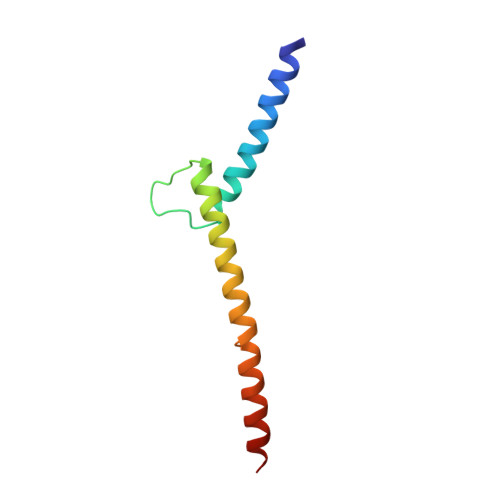
MAD PROTEINE [auth A],
G [auth D]
80Homo sapiensMutation(s): 3 
Gene Names: Mad
UniProt & NIH Common Fund Data Resources
Find proteins for Q05195 (Homo sapiens)
Explore Q05195 
Go to UniProtKB:  Q05195
PHAROS:  Q05195
GTEx:  ENSG00000059728 
Entity Groups
Sequence Clusters30% Identity50% Identity70% Identity90% Identity95% Identity100% Identity
UniProt GroupQ05195
Sequence Annotations
Expand
Reference Sequence
Find similar proteins by:|  3D Structure
Entity ID: 3
MoleculeChains  Sequence LengthOrganismDetailsImage
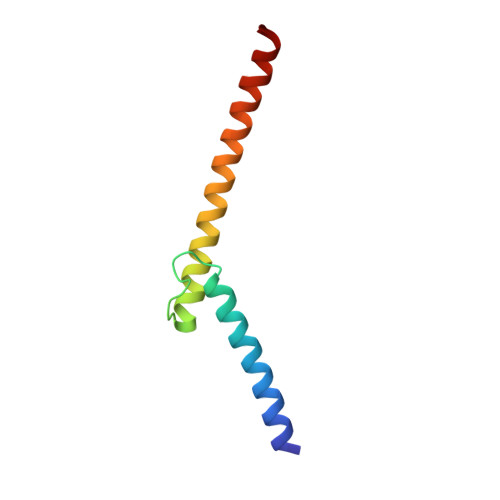
MAX PROTEINF [auth B],
H [auth E]
76Homo sapiensMutation(s): 0 
Gene Names: Max
UniProt & NIH Common Fund Data Resources
Find proteins for P61244 (Homo sapiens)
Explore P61244 
Go to UniProtKB:  P61244
PHAROS:  P61244
GTEx:  ENSG00000125952 
Entity Groups
Sequence Clusters30% Identity50% Identity70% Identity90% Identity95% Identity100% Identity
UniProt GroupP61244
Sequence Annotations
Expand
Reference Sequence
Find similar nucleic acids by:  Sequence
Entity ID: 1
MoleculeChains LengthOrganismImage
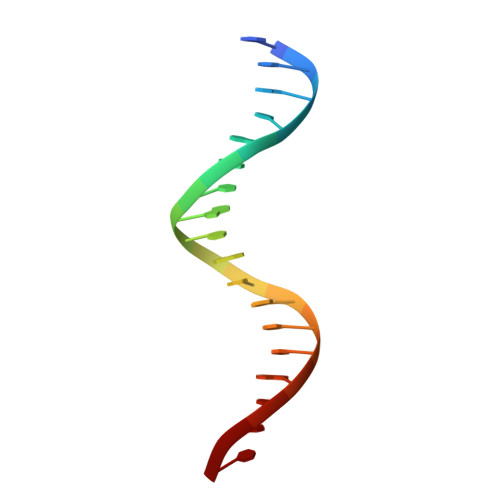
5'-D(*GP*AP*GP*TP*AP*GP*CP*AP*CP*GP*TP*GP*CP*TP*AP*CP*TP*C)-3'A [auth F],
B [auth G],
C [auth H],
D [auth J]
18N/A
Sequence Annotations
Expand
Reference Sequence

Experimental Data & Validation

Experimental Data

  • Method: X-RAY DIFFRACTION
  • Resolution: 2.00 Å
  • R-Value Free:  0.324 (Depositor) 
  • R-Value Work:  0.264 (Depositor) 
  • R-Value Observed: 0.264 (Depositor) 
Space Group: P 1
Unit Cell:
Length ( Å )Angle ( ˚ )
a = 47.346α = 88.82
b = 56.02β = 79.08
c = 65.602γ = 67.11
Software Package:
Software NamePurpose
DENZOdata reduction
SCALEPACKdata scaling
AMoREphasing
CNSrefinement

Structure Validation

View Full Validation Report


Entry History 

Deposition Data

Revision History  (Full details and data files)

  • Version 1.0: 2003-02-04
    Type: Initial release
  • Version 1.1: 2008-04-29
    Changes: Version format compliance
  • Version 1.2: 2011-07-13
    Changes: Version format compliance
  • Version 1.3: 2021-02-03
    Changes: Database references, Structure summary
  • Version 1.4: 2021-10-27
    Changes: Database references
  • Version 1.5: 2023-08-16
    Changes: Data collection, Refinement description