1DV3 | pdb_00001dv3

PHOTOSYNTHETIC REACTION CENTER FROM RHODOBACTER SPHAEROIDES IN THE CHARGE-SEPARATED D+QAQB-STATE WITH THE PROTON TRANSFER INHIBITOR CD2+


Experimental Data Snapshot

  • Method: X-RAY DIFFRACTION
  • Resolution: 2.50 Å
  • R-Value Free: 
    0.252 (Depositor), 0.240 (DCC) 
  • R-Value Work: 
    0.226 (Depositor), 0.216 (DCC) 
  • R-Value Observed: 
    0.227 (Depositor) 

wwPDB Validation 3D Report Full Report

Validation slider image for 1DV3

Ligand Structure Quality Assessment 


This is version 1.3 of the entry. See complete history

Literature

Determination of the binding sites of the proton transfer inhibitors Cd2+ and Zn2+ in bacterial reaction centers.

Axelrod, H.L.Abresch, E.C.Paddock, M.L.Okamura, M.Y.Feher, G.

(2000) Proc Natl Acad Sci U S A 97: 1542-1547

  • DOI: https://doi.org/10.1073/pnas.97.4.1542
  • Primary Citation Related Structures: 
    1DS8, 1DV3, 1DV6

  • PubMed Abstract: 

    The reaction center (RC) from Rhodobacter sphaeroides couples light-driven electron transfer to protonation of a bound quinone acceptor molecule, Q(B), within the RC. The binding of Cd(2+) or Zn(2+) has been previously shown to inhibit the rate of reduction and protonation of Q(B). We report here on the metal binding site, determined by x-ray diffraction at 2.5-A resolution, obtained from RC crystals that were soaked in the presence of the metal. The structures were refined to R factors of 23% and 24% for the Cd(2+) and Zn(2+) complexes, respectively. Both metals bind to the same location, coordinating to Asp-H124, His-H126, and His-H128. The rate of electron transfer from Q(A)(-) to Q(B) was measured in the Cd(2+)-soaked crystal and found to be the same as in solution in the presence of Cd(2+). In addition to the changes in the kinetics, a structural effect of Cd(2+) on Glu-H173 was observed. This residue was well resolved in the x-ray structure-i.e., ordered-with Cd(2+) bound to the RC, in contrast to its disordered state in the absence of Cd(2+), which suggests that the mobility of Glu-H173 plays an important role in the rate of reduction of Q(B). The position of the Cd(2+) and Zn(2+) localizes the proton entry into the RC near Asp-H124, His-H126, and His-H128. Based on the location of the metal, likely pathways of proton transfer from the aqueous surface to Q(B) are proposed.


  • Organizational Affiliation
    • Department of Physics 0319, 9500 Gilman Drive, University of California at San Diego, La Jolla, CA 92093, USA.

Macromolecule Content 

  • Total Structure Weight: 202.85 kDa 
  • Atom Count: 14,271 
  • Modeled Residue Count: 1,652 
  • Deposited Residue Count: 1,696 
  • Unique protein chains: 3

Macromolecules

Find similar proteins by:|  3D Structure
Entity ID: 1
MoleculeChains  Sequence LengthOrganismDetailsImage
PHOTOSYNTHETIC REACTION CENTER REACTION CENTERA [auth L],
D [auth R]
281Cereibacter sphaeroidesMutation(s): 0 
Membrane Entity: Yes 
UniProt
Find proteins for P0C0Y8 (Cereibacter sphaeroides)
Explore P0C0Y8 
Go to UniProtKB:  P0C0Y8
Entity Groups
Sequence Clusters30% Identity50% Identity70% Identity90% Identity95% Identity100% Identity
UniProt GroupP0C0Y8
Sequence Annotations
Expand
Reference Sequence
Find similar proteins by:|  3D Structure
Entity ID: 2
MoleculeChains  Sequence LengthOrganismDetailsImage
PHOTOSYNTHETIC REACTION CENTER REACTION CENTERB [auth M],
E [auth S]
307Cereibacter sphaeroidesMutation(s): 0 
Membrane Entity: Yes 
UniProt
Find proteins for P0C0Y9 (Cereibacter sphaeroides)
Explore P0C0Y9 
Go to UniProtKB:  P0C0Y9
Entity Groups
Sequence Clusters30% Identity50% Identity70% Identity90% Identity95% Identity100% Identity
UniProt GroupP0C0Y9
Sequence Annotations
Expand
Reference Sequence
Find similar proteins by:|  3D Structure
Entity ID: 3
MoleculeChains  Sequence LengthOrganismDetailsImage
PHOTOSYNTHETIC REACTION CENTER REACTION CENTERC [auth H],
F [auth T]
260Cereibacter sphaeroidesMutation(s): 0 
Membrane Entity: Yes 
UniProt
Find proteins for P0C0Y7 (Cereibacter sphaeroides)
Explore P0C0Y7 
Go to UniProtKB:  P0C0Y7
Entity Groups
Sequence Clusters30% Identity50% Identity70% Identity90% Identity95% Identity100% Identity
UniProt GroupP0C0Y7
Sequence Annotations
Expand
Reference Sequence

Small Molecules

Ligands 7 Unique
IDChains Name / Formula / InChI Key2D Diagram3D Interactions
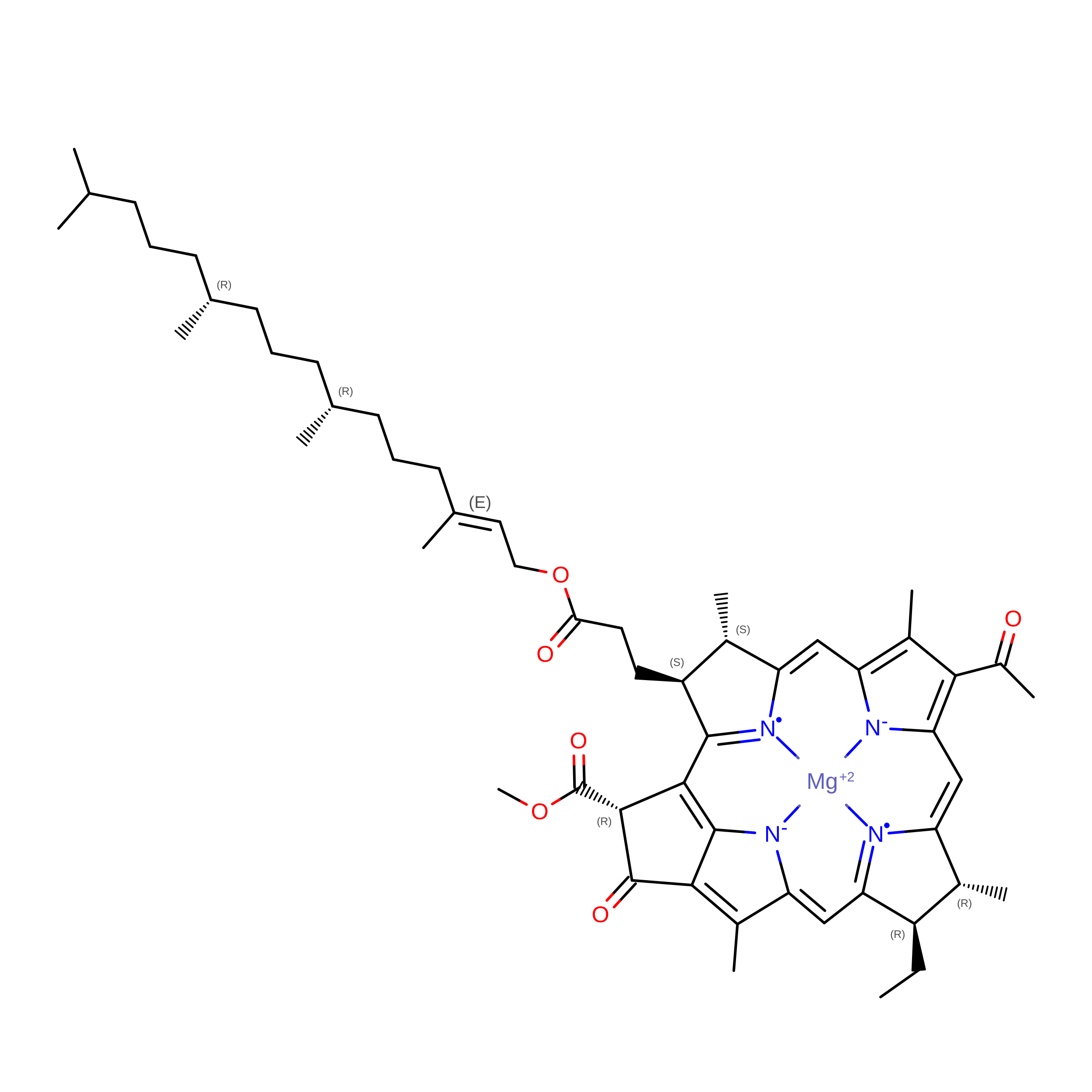
BCL

Query on BCL


Download:Ideal Coordinates CCD File
AA [auth S]
G [auth L]
H [auth L]
M
N [auth M]
AA [auth S],
G [auth L],
H [auth L],
M,
N [auth M],
T [auth R],
U [auth R],
Z [auth S]
BACTERIOCHLOROPHYLL A
C55 H74 Mg N4 O6
DSJXIQQMORJERS-AGGZHOMASA-M
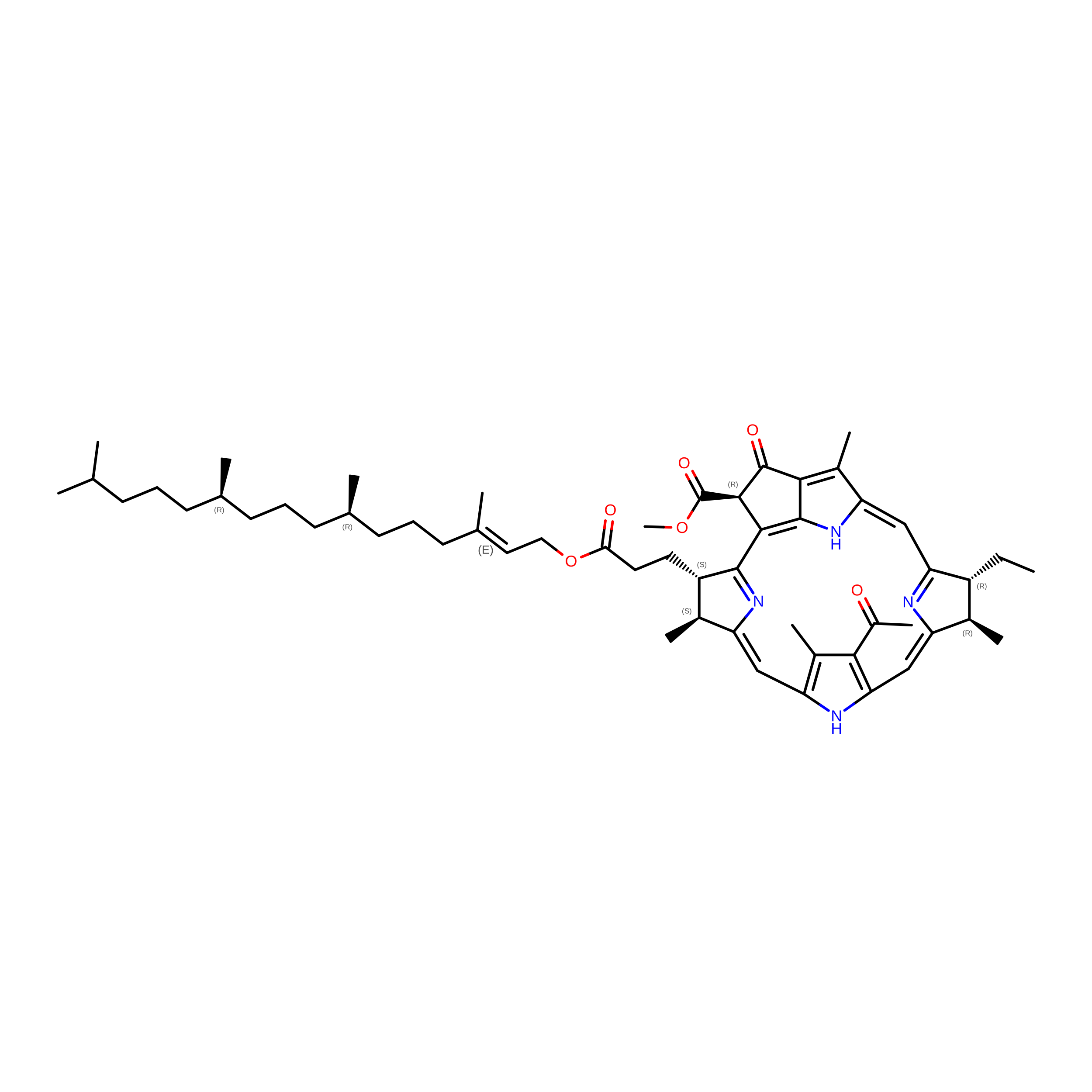
BPH

Query on BPH


Download:Ideal Coordinates CCD File
BA [auth S],
I [auth L],
O [auth M],
V [auth R]
BACTERIOPHEOPHYTIN A
C55 H76 N4 O6
KWOZSBGNAHVCKG-SZQBJALDSA-N
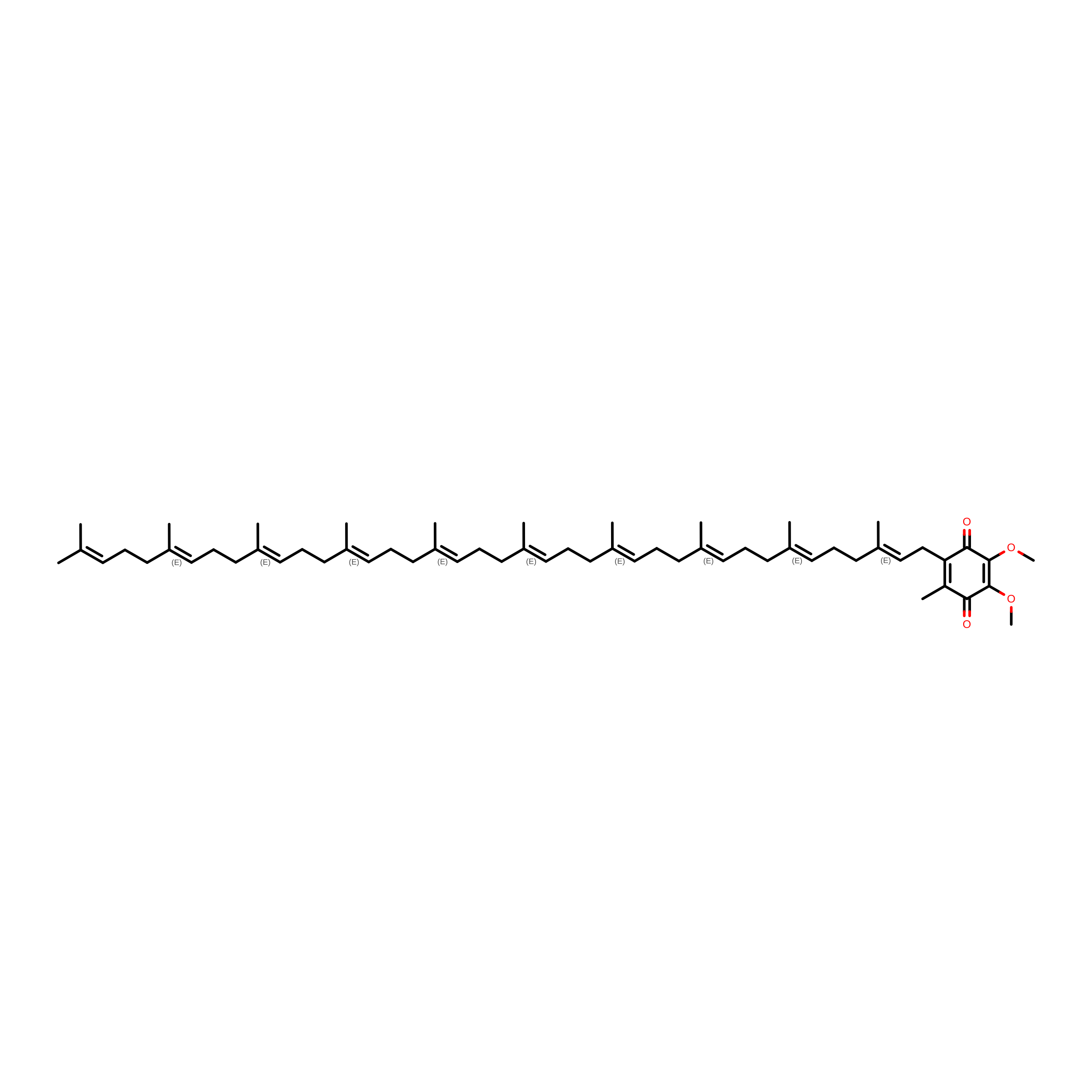
U10

Query on U10


Download:Ideal Coordinates CCD File
CA [auth S],
J [auth L],
P [auth M],
W [auth R]
UBIQUINONE-10
C59 H90 O4
ACTIUHUUMQJHFO-UPTCCGCDSA-N
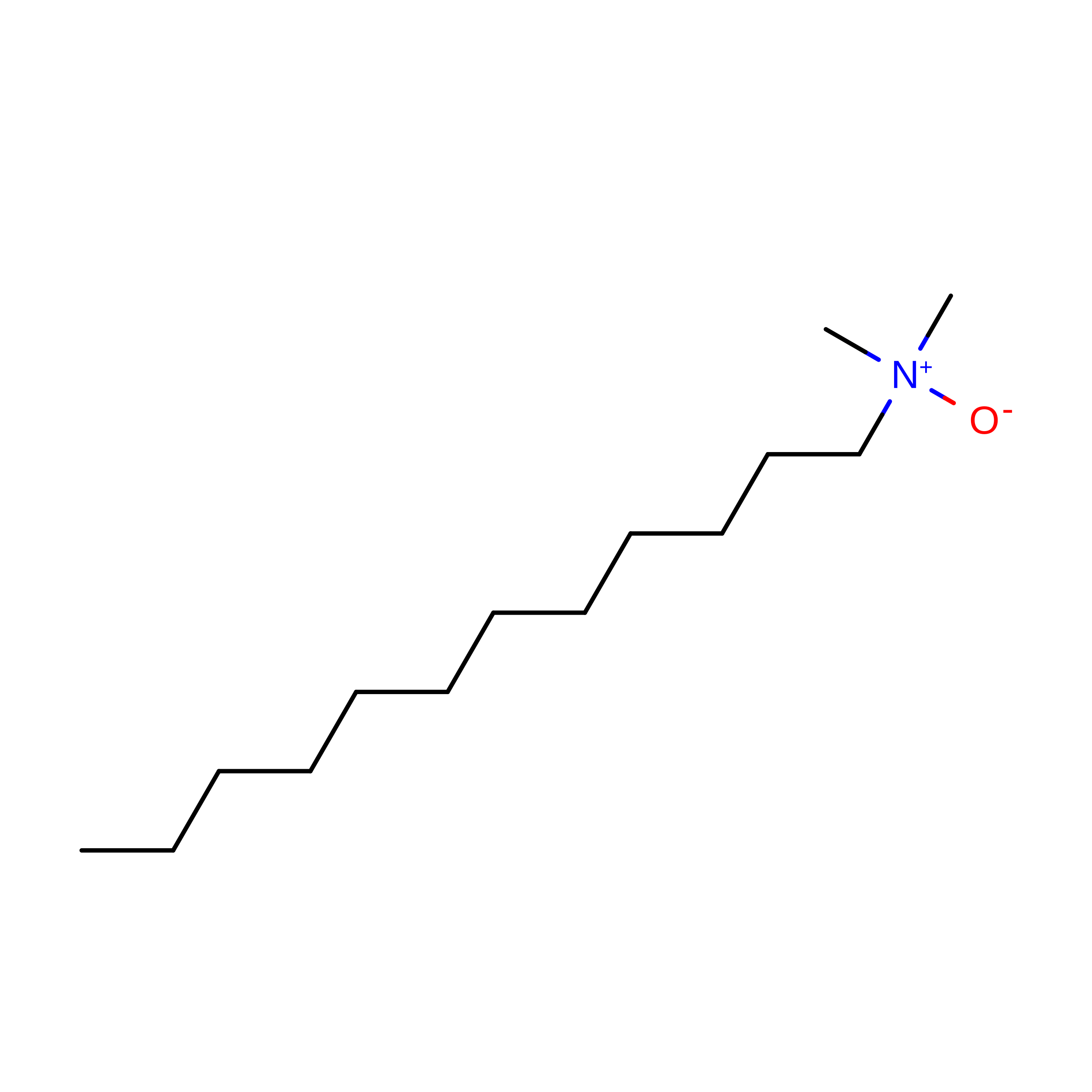
LDA

Query on LDA


Download:Ideal Coordinates CCD File
Q [auth M],
R [auth M]
LAURYL DIMETHYLAMINE-N-OXIDE
C14 H31 N O
SYELZBGXAIXKHU-UHFFFAOYSA-N
CD

Query on CD


Download:Ideal Coordinates CCD File
DA [auth T],
S [auth H]
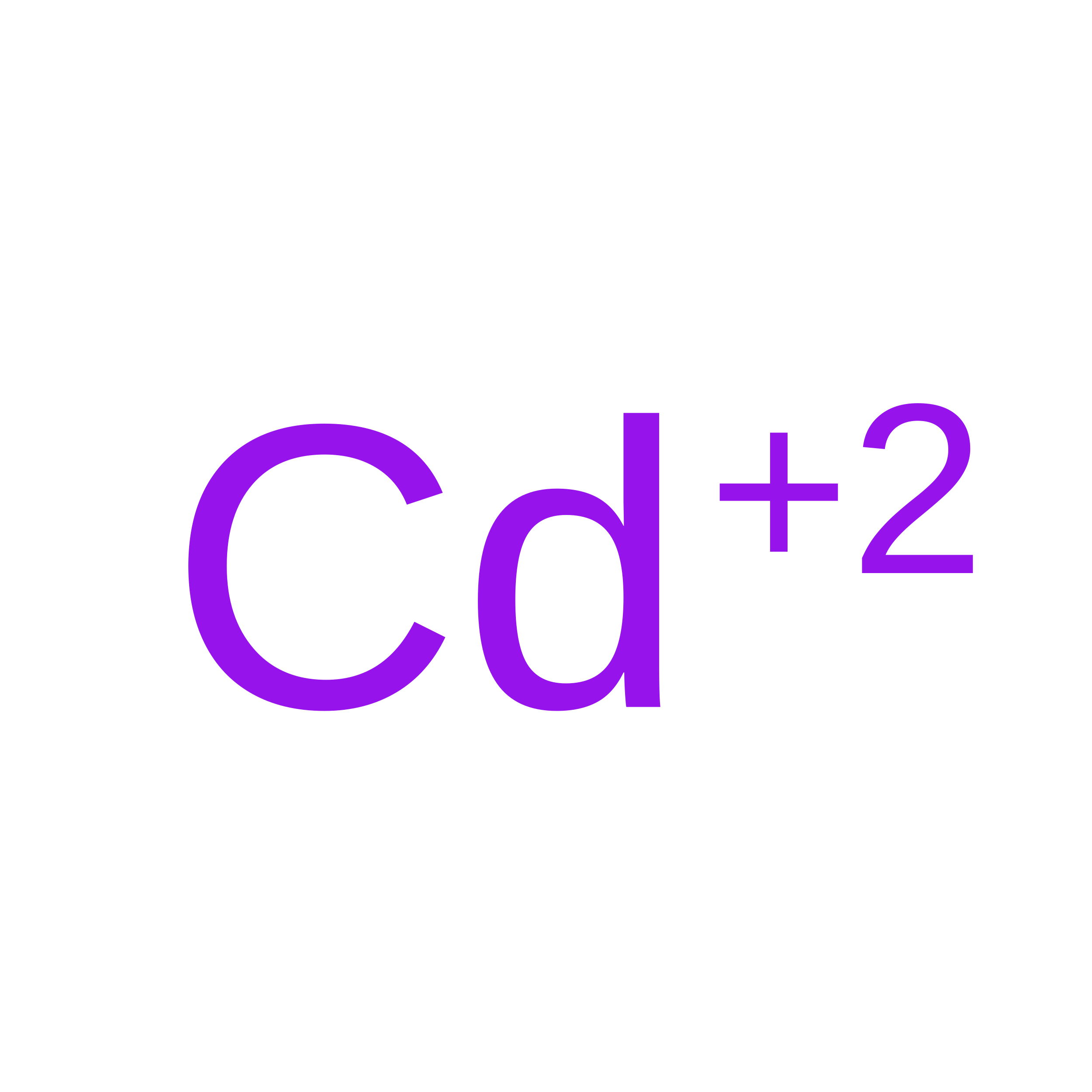
CADMIUM ION
Cd
WLZRMCYVCSSEQC-UHFFFAOYSA-N
FE2

Query on FE2


Download:Ideal Coordinates CCD File
K [auth M],
X [auth S]
FE (II) ION
Fe
CWYNVVGOOAEACU-UHFFFAOYSA-N
CL

Query on CL


Download:Ideal Coordinates CCD File
L [auth M],
Y [auth S]
CHLORIDE ION
Cl
VEXZGXHMUGYJMC-UHFFFAOYSA-M

Experimental Data & Validation

Experimental Data

  • Method: X-RAY DIFFRACTION
  • Resolution: 2.50 Å
  • R-Value Free:  0.252 (Depositor), 0.240 (DCC) 
  • R-Value Work:  0.226 (Depositor), 0.216 (DCC) 
  • R-Value Observed: 0.227 (Depositor) 
Space Group: P 43 21 2
Unit Cell:
Length ( Å )Angle ( ˚ )
a = 141.25α = 90
b = 141.25β = 90
c = 275.33γ = 90
Software Package:
Software NamePurpose
CNSrefinement
MOSFLMdata reduction
CCP4data scaling
CNSphasing

Structure Validation

View Full Validation Report


Ligand Structure Quality Assessment 


Entry History 

Deposition Data

Revision History  (Full details and data files)

  • Version 1.0: 2000-03-08
    Type: Initial release
  • Version 1.1: 2008-04-27
    Changes: Version format compliance
  • Version 1.2: 2011-07-13
    Changes: Non-polymer description, Version format compliance
  • Version 1.3: 2024-02-07
    Changes: Data collection, Database references, Derived calculations