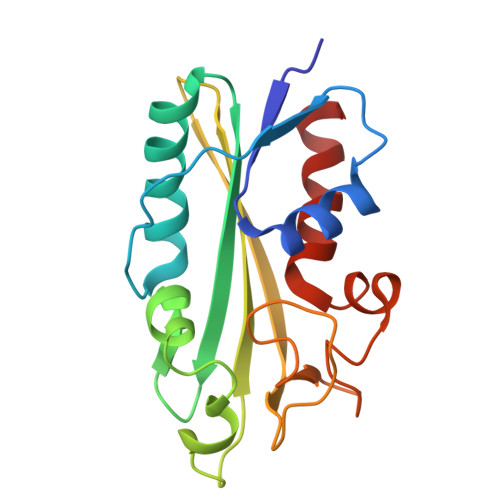
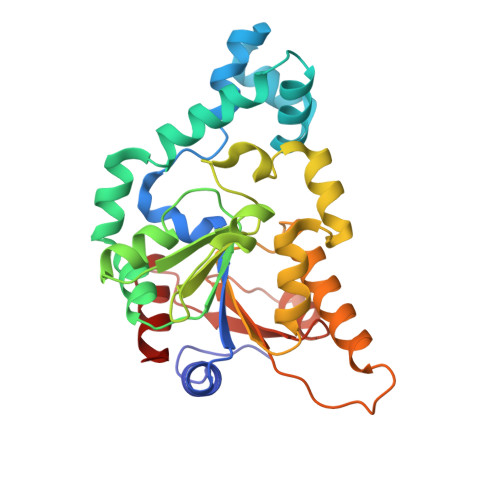
Nucleotide-derived second messengers are frequently deployed by bacteria to activate effector proteins to mediate the immunity. The Kongming system uses deoxyinosine triphosphate (dITP) to trigger nicotinamide adenine dinucleotide (NAD + ) depletion via the Sir2-domain protein KomC. We reveal that dITP binding to the KomB-KomC (KomBC) complex stabilizes KomB dimerization, initiating hierarchical allosteric changes. This drives KomBC filament assembly, which is essential for activating the NADase activity of KomC. Cryo-EM structures of apo-, dITP-bound, NAD + -bound and postcatalytic KomBC filaments show the structural landscape of how dITP-induced remodeling reshapes the catalytic pocket of KomC, enabling NAD + hydrolysis. Mutagenesis confirms that filament assembly and allostery are critical for catalysis. These findings elucidate the structural basis for the recognition of the nucleotide derivative signaling molecule, the assembly and the filament-mediated allosteric activation mechanism in prokaryotic immunity and a distinct variation of Sir2 NADase activation.
Organizational Affiliation:
Key Laboratory of Microbial Pathogenesis and Interventions of Fujian Province University, the Key Laboratory of Innate Immune Biology of Fujian Province, Biomedical Research Center of South China, Key Laboratory of OptoElectronic Science and Technology for Medicine of the Ministry of Education, College of Life Sciences, Fujian Normal University, Fuzhou 350117, China.
State Key Laboratory of Vaccines for Infectious Diseases, Xiang An Biomedicine Laboratory, School of Public Health, School of Life Sciences, Xiamen University, Xiamen 361102, China; National Institute of Diagnostics and Vaccine Development in Infectious Diseases, State Key Laboratory of Molecular Vaccinology and Molecular Diagnostics, National Innovation Platform for Industry-Education Integration in Vaccine Research, the Research Unit of Frontier Technology of Structural Vaccinology of Chinese Academy of Medical Sciences, Xiamen University, Xiamen 361102, China.
State Key Laboratory of Vaccines for Infectious Diseases, Xiang An Biomedicine Laboratory, School of Public Health, School of Life Sciences, Xiamen University, Xiamen 361102, China; National Institute of Diagnostics and Vaccine Development in Infectious Diseases, State Key Laboratory of Molecular Vaccinology and Molecular Diagnostics, National Innovation Platform for Industry-Education Integration in Vaccine Research, the Research Unit of Frontier Technology of Structural Vaccinology of Chinese Academy of Medical Sciences, Xiamen University, Xiamen 361102, China. Electronic address: shaowei@xmu.edu.cn.
State Key Laboratory of Vaccines for Infectious Diseases, Xiang An Biomedicine Laboratory, School of Public Health, School of Life Sciences, Xiamen University, Xiamen 361102, China; National Institute of Diagnostics and Vaccine Development in Infectious Diseases, State Key Laboratory of Molecular Vaccinology and Molecular Diagnostics, National Innovation Platform for Industry-Education Integration in Vaccine Research, the Research Unit of Frontier Technology of Structural Vaccinology of Chinese Academy of Medical Sciences, Xiamen University, Xiamen 361102, China. Electronic address: nsxia@xmu.edu.cn.
State Key Laboratory of Vaccines for Infectious Diseases, Xiang An Biomedicine Laboratory, School of Public Health, School of Life Sciences, Xiamen University, Xiamen 361102, China; National Institute of Diagnostics and Vaccine Development in Infectious Diseases, State Key Laboratory of Molecular Vaccinology and Molecular Diagnostics, National Innovation Platform for Industry-Education Integration in Vaccine Research, the Research Unit of Frontier Technology of Structural Vaccinology of Chinese Academy of Medical Sciences, Xiamen University, Xiamen 361102, China. Electronic address: qbzheng@xmu.edu.cn.
Key Laboratory of Microbial Pathogenesis and Interventions of Fujian Province University, the Key Laboratory of Innate Immune Biology of Fujian Province, Biomedical Research Center of South China, Key Laboratory of OptoElectronic Science and Technology for Medicine of the Ministry of Education, College of Life Sciences, Fujian Normal University, Fuzhou 350117, China. Electronic address: ouyangsy@fjnu.edu.cn.








 Download Mendeley