Download Mendeley
Protein-confined imidazolium intermediates enable diverse biocatalytic C-C and C-N bond formations.
Birch-Price, Z., Hutton, A.E., Zhao, F., Ortmayer, M., Stoianova, V., Merten, C., Levy, C., Obexer, R., Green, A.P.(2026) Nat Catal 9: 882-892
- PubMed: 42630285 Search on PubMedSearch on PubMed Central
- DOI: https://doi.org/10.1038/s41929-026-01587-8
- Primary Citation Related Structures:
9R2D - PubMed Abstract:
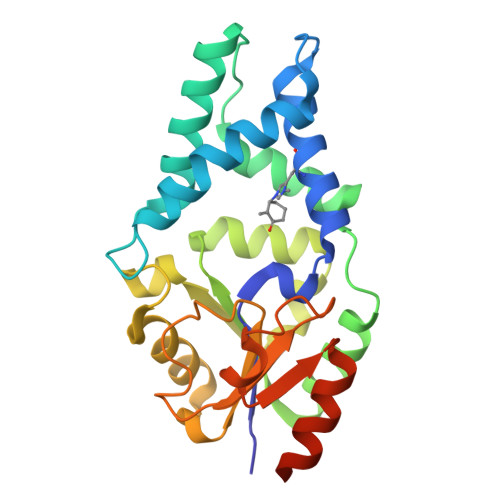
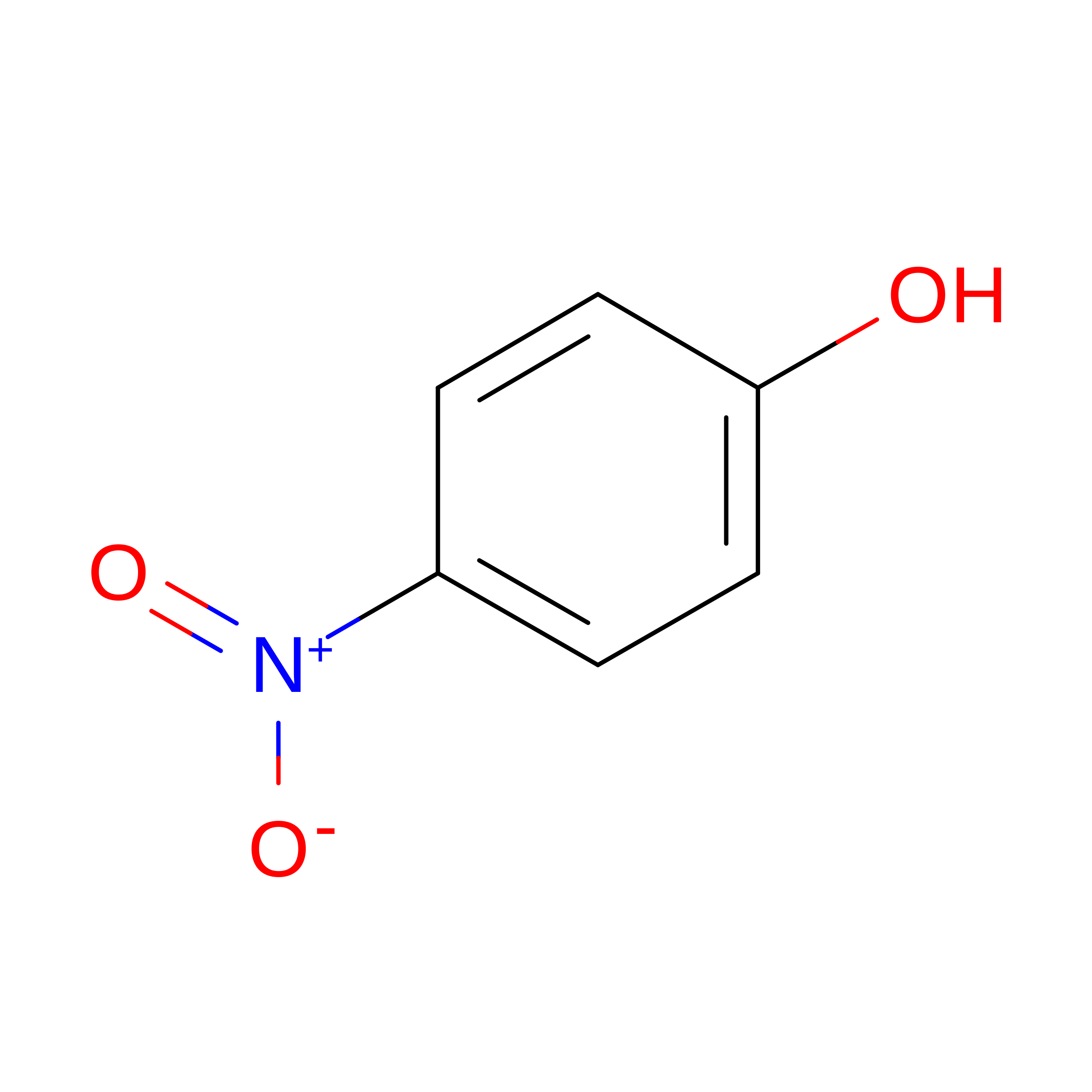
Developing enzymatic strategies to selectively construct C-C and C-heteroatom bonds is a major objective in modern biocatalysis. Here we combine genetic code reprogramming and laboratory evolution to establish a family of allylic transferase enzymes that can achieve a remarkable breadth of chemistry, enabling the generation of valuable motifs including γ‑butenolides, chiral amines and all-carbon quaternary centres. Our enzymes operate through the formation of electrophilic imidazolium intermediates that can be generated from reagents equipped with a para -nitrophenol leaving group to facilitate high-throughput evolution. These intermediates can be intercepted with diverse carbon and nitrogen nucleophiles to generate densely functionalized products featuring Cβ or Cγ stereocentres. Interestingly, structural analysis suggests that catalysis proceeds through an unanticipated ternary complex involving para -nitrophenol and the incoming substrate nucleophile. This study adds a family of C-C and C-N bond-forming enzymes to the biocatalytic repertoire and illustrates how artificial enzymes can achieve precise control over challenging chemical conversions.
- Manchester Institute of Biotechnology and Department of Chemistry, The University of Manchester, Manchester, UK.
Organizational Affiliation: