Download Mendeley
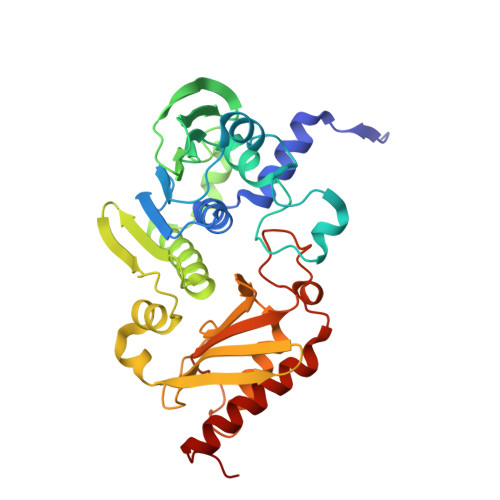
Bacillus subtilis MutL samples multiple conformations during nucleotide binding and hydrolysis.
Rodriguez Gonzalez, J., Davis, C.L., Wilkins, H., Erie, D.A., Guarne, A.(2025) Structure
- PubMed: 41478286
- DOI: https://doi.org/10.1016/j.str.2025.12.007
- Primary Citation of Related Structures:
9N2K - PubMed Abstract:
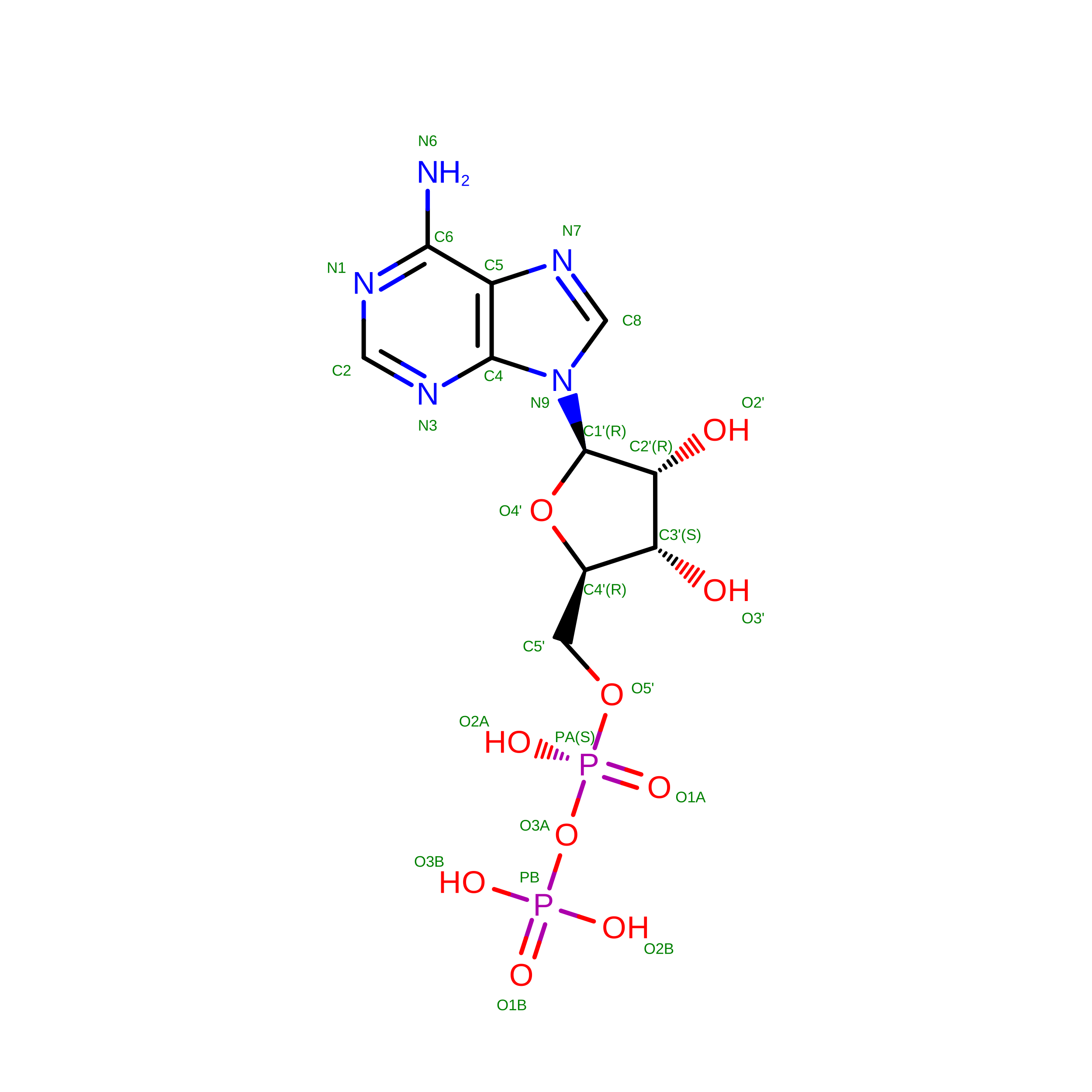
DNA mismatch repair is an evolutionarily conserved repair pathway that corrects replication errors, thereby preventing genome instability. Two evolutionarily conserved proteins, MutS and MutL, recognize the mismatch and mark the newly synthesized strand for repair. Previous studies have shown how bacterial MutS homodimers function asymmetrically to recognize mismatches and recruit MutL. However, whether MutL homodimers also function asymmetrically to coordinate binding to MutS and activation of their nuclease activity remains unclear. Here, we characterize the ATPase domain of Bacillus subtilis MutL, a MutL protein with endonuclease activity, and delineate the differences with Escherichia coli MutL, a homolog without endonuclease activity. We find that B. subtilis MutL has low affinity for ATP and samples a repertoire of conformations that resemble those observed in eukaryotic MutL paralogs, indicating a relationship between ATP-induced dimer compaction and nuclease activity.
- Department of Biochemistry and Centre de Recherche en Biologie Structurale, McGill University, Montreal, QC, Canada.
Organizational Affiliation: