Download Mendeley
A nucleotide code governs Lis1's ability to relieve dynein autoinhibition.
Geohring, I.C., Chai, P., Iyer, B.R., Ton, W.D., Yang, J., Ide, A.H., George, S.C., Bagri, J.S., Baird, S.V., Zhang, K., Markus, S.M.(2026) Nat Chem Biol
- PubMed: 41571912
- DOI: https://doi.org/10.1038/s41589-025-02096-8
- Primary Citation of Related Structures:
9MFV, 9MFW, 9MFX, 9MFY - PubMed Abstract:
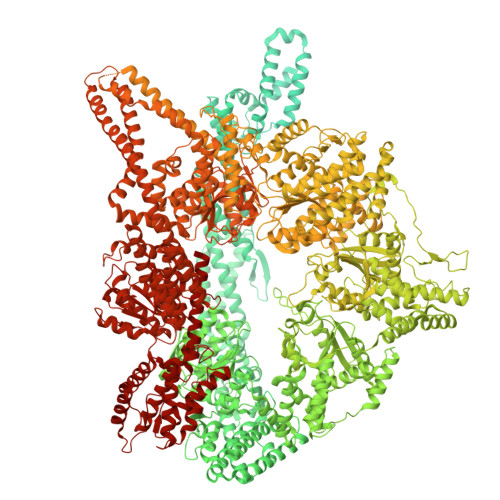
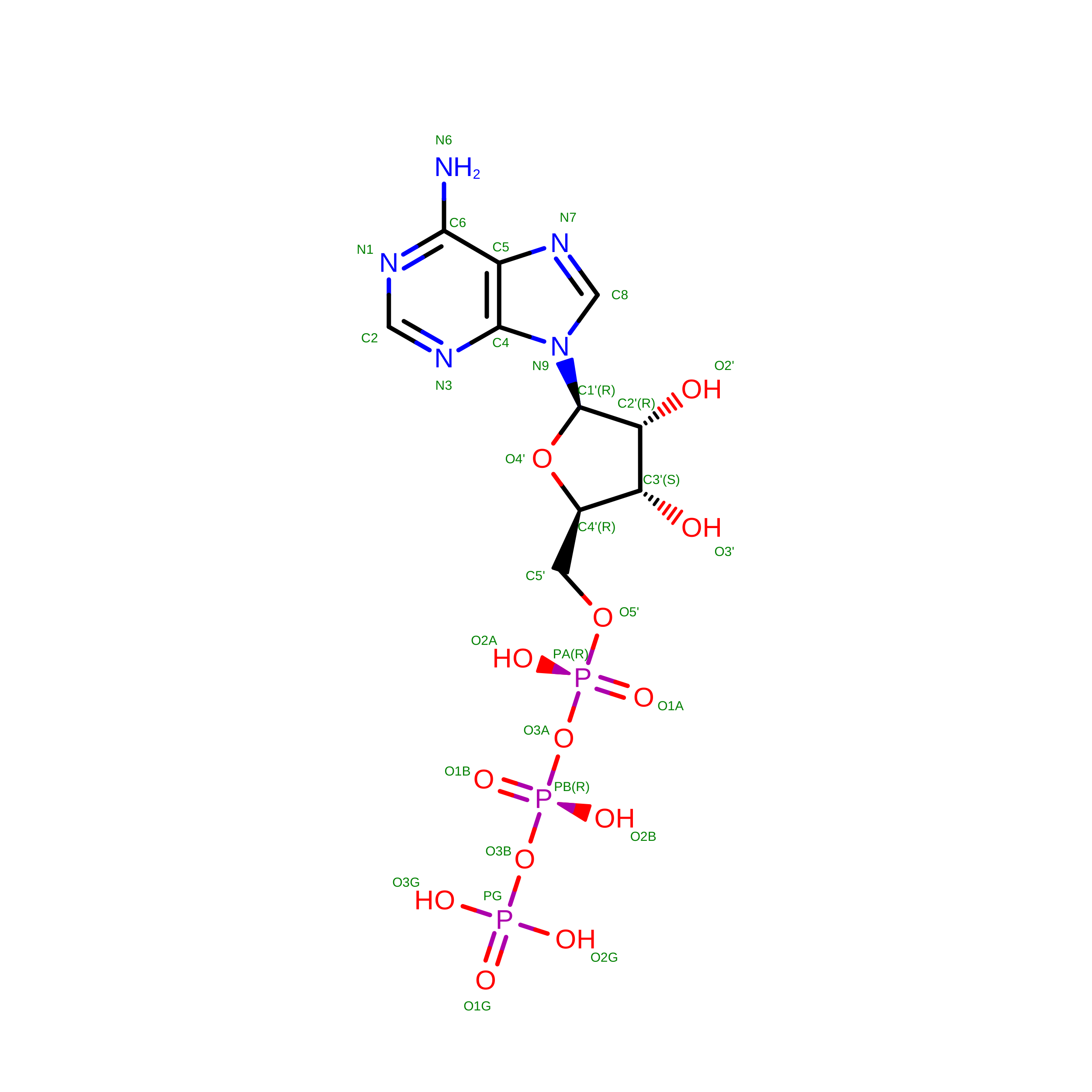
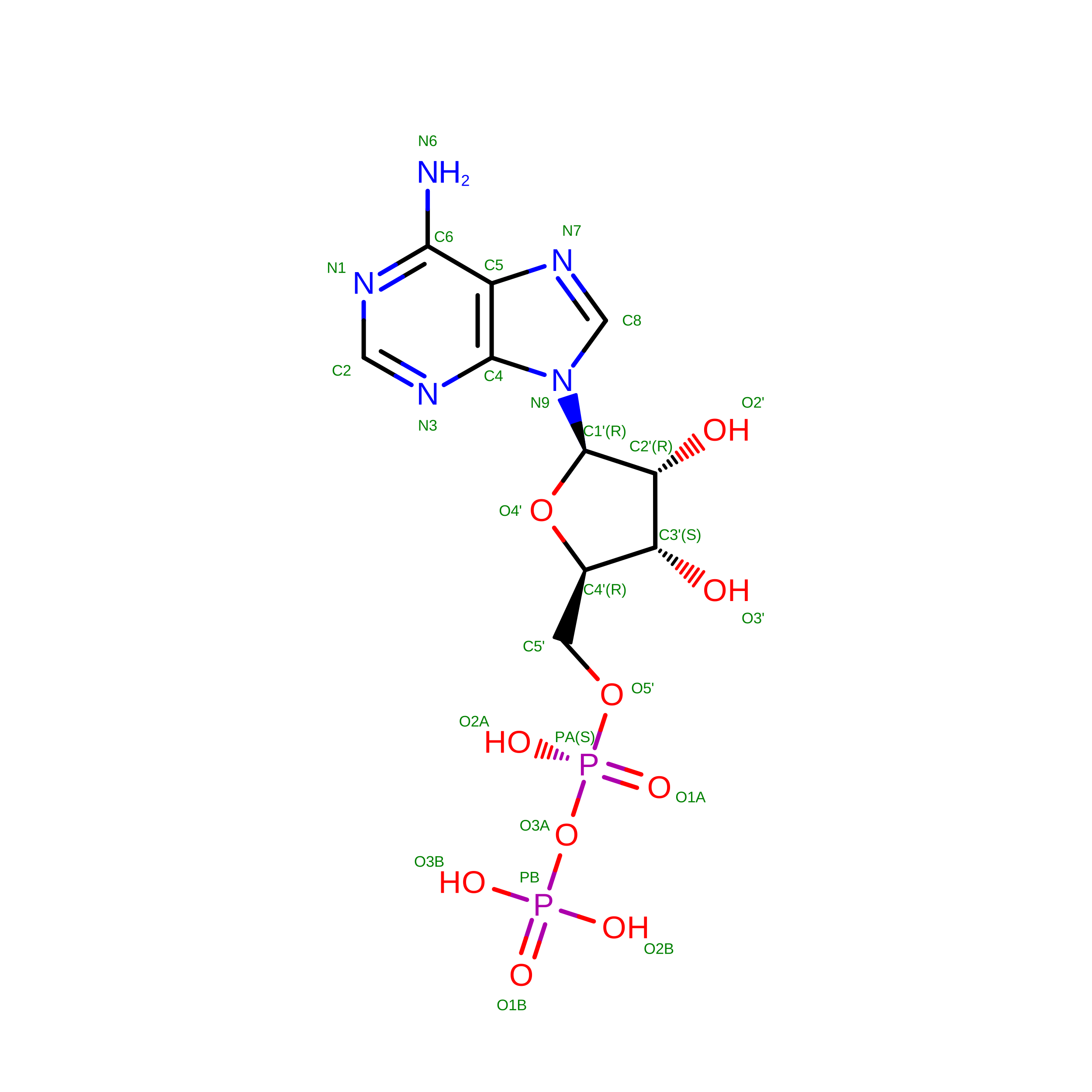
Dynein-1 is a microtubule motor that transports numerous cytoplasmic cargoes. Activation of motility requires it first overcome an autoinhibited state before its assembly with dynactin and a cargo adaptor. Studies suggest that Lis1 may relieve dynein's autoinhibited state, although evidence for this is lacking. We first determined the rules governing dynein-Lis1 binding, revealing that their binding affinity is regulated by the nucleotide-bound states of each of three nucleotide-binding pockets within dynein. We also found that distinct nucleotide 'codes' coordinate their binding stoichiometry by impacting binding affinity at two different sites within the dynein motor domain. Electron microscopy revealed that a 1 dynein:1 Lis1 complex directly promotes an uninhibited conformational state of dynein, whereas a 1:2 complex resembles the autoinhibited state. Cryo-electron microscopy revealed that the structural basis for Lis1 opening dynein relies on interactions with the linker domain. Our work reveals the biochemical basis by which Lis1 relieves dynein autoinhibition.
- Department of Biochemistry and Molecular Biology, Colorado State University, Fort Collins, CO, USA.
Organizational Affiliation: