9CX2 | pdb_00009cx2

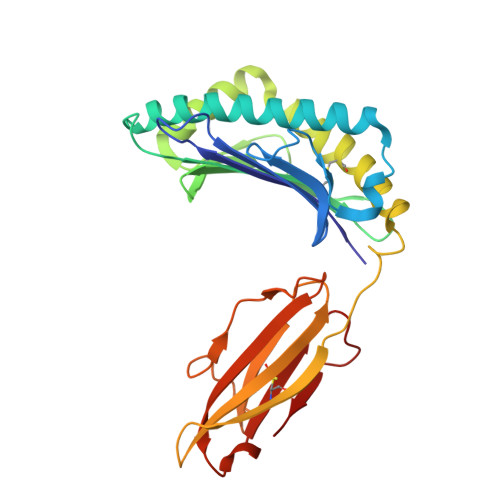
Crystal structure of HLA-A*03:01 L156Q mutant in complex with a mutant PIK3CA peptide


Experimental Data Snapshot

  • Method: X-RAY DIFFRACTION
  • Resolution: 2.30 Å
  • R-Value Free: 
    0.219 (Depositor), 0.222 (DCC) 
  • R-Value Work: 
    0.194 (Depositor), 0.200 (DCC) 

Starting Model: experimental
View more details

wwPDB Validation 3D Report Full Report

Validation slider image for 9CX2

This is version 1.1 of the entry. See complete history

Literature

HLA micropolymorphisms confine neoantigen conformational adaptability and guide T cell receptor selectivity.

Ma, J.Ayres, C.M.Brambley, C.A.Eldaly, B.Perera, W.W.J.G.Lazar, J.A.Kovrigin, E.L.Chandran, S.S.Klebanoff, C.A.Baker, B.M.

(2026) Proc Natl Acad Sci U S A 123: e2602949123-e2602949123

  • DOI: https://doi.org/10.1073/pnas.2602949123
  • Primary Citation Related Structures: 
    9CWZ, 9CX2

  • PubMed Abstract: 

    T cell receptor (TCR) restriction by highly polymorphic major histocompatibility complex (MHC) proteins is a foundation of cellular immunity. Although the effects of MHC polymorphisms on peptide binding and selection are well established, how micropolymorphisms within MHC supertypes impact immune recognition is poorly understood. Here, we identified a mechanism through which the micropolymorphisms in two closely related HLA-A3 superfamily members govern TCR specificity. We previously showed that TCRs specific for a public neoantigen arising from a PIK3CA oncogenic hotspot mutation restricted by HLA-A*03:01 were unable to recognize the same epitope in the context of HLA-A*03:02 despite equivalent processing and presentation by both alleles. We found here that the two micropolymorphisms distinguishing A*03:02 from A*03:01 prevent TCR binding not by altering peptide binding or static structures, but by altering the conformational ensemble of the neoantigen, preventing it from adopting a binding-permissive state. The effect is rooted in how the two polymorphic sites interact with other covarying, evolutionarily coupled polymorphisms, reflecting a cross-groove network of interactions that controls the conformational adaptability of the peptide/HLA complex. We suggest polymorphism-dependent adaptability reflects an evolved feature of class I MHC proteins, further diversifying epitopes and contributing to how TCRs and other immunoreceptors differentiate between antigens. Beyond this mechanistic insight, our findings emphasize the need for high-resolution HLA typing in efforts across immunology, including antigen-specific immunotherapy.


  • Organizational Affiliation
    • Harper Cancer Research Institute and the Department of Chemistry and Biochemistry, University of Notre Dame, Notre Dame, IN 46656.

Macromolecule Content 

  • Total Structure Weight: 44.5 kDa 
  • Atom Count: 3,435 
  • Modeled Residue Count: 383 
  • Deposited Residue Count: 383 
  • Unique protein chains: 3

Macromolecules

Find similar proteins by:|  3D Structure
Entity ID: 1
MoleculeChains  Sequence LengthOrganismDetailsImage
HLA class I histocompatibility antigen, A alpha chain274Homo sapiensMutation(s): 1 
Gene Names: HLA-AHLAA
UniProt & NIH Common Fund Data Resources
Find proteins for P04439 (Homo sapiens)
Explore P04439 
Go to UniProtKB:  P04439
PHAROS:  P04439
GTEx:  ENSG00000206503 
Entity Groups
Sequence Clusters30% Identity50% Identity70% Identity90% Identity95% Identity100% Identity
UniProt GroupP04439
Sequence Annotations
Expand
Reference Sequence
Find similar proteins by:|  3D Structure
Entity ID: 2
MoleculeChains  Sequence LengthOrganismDetailsImage
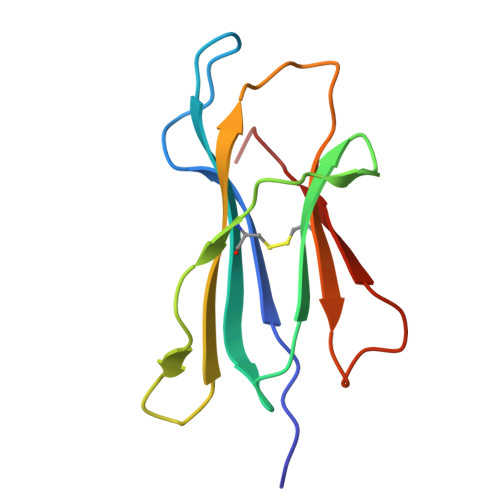
Beta-2-microglobulin100Homo sapiensMutation(s): 0 
Gene Names: B2MCDABP0092HDCMA22P
UniProt & NIH Common Fund Data Resources
Find proteins for P61769 (Homo sapiens)
Explore P61769 
Go to UniProtKB:  P61769
PHAROS:  P61769
GTEx:  ENSG00000166710 
Entity Groups
Sequence Clusters30% Identity50% Identity70% Identity90% Identity95% Identity100% Identity
UniProt GroupP61769
Sequence Annotations
Expand
Reference Sequence
Find similar proteins by:  Sequence   |   3D Structure  
Entity ID: 3
MoleculeChains  Sequence LengthOrganismDetailsImage
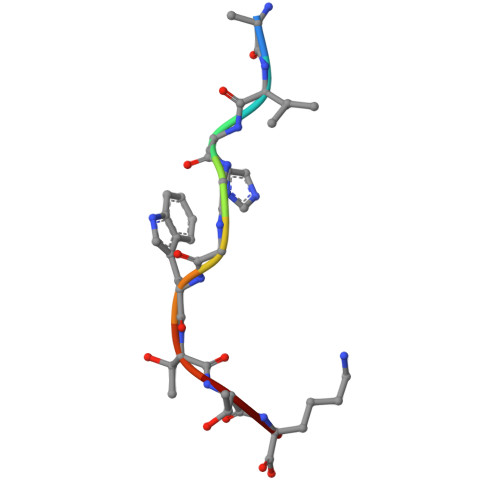
Mutant PIK3CA peptide9Homo sapiensMutation(s): 1 
EC: 2.7.1.137 (UniProt), 2.7.11.1 (UniProt), 2.7.1.153 (UniProt)
UniProt & NIH Common Fund Data Resources
Find proteins for P42336 (Homo sapiens)
Explore P42336 
Go to UniProtKB:  P42336
PHAROS:  P42336
GTEx:  ENSG00000121879 
Entity Groups
UniProt GroupP42336
Sequence Annotations
Expand
Reference Sequence

Experimental Data & Validation

Experimental Data

  • Method: X-RAY DIFFRACTION
  • Resolution: 2.30 Å
  • R-Value Free:  0.219 (Depositor), 0.222 (DCC) 
  • R-Value Work:  0.194 (Depositor), 0.200 (DCC) 
Space Group: P 6 2 2
Unit Cell:
Length ( Å )Angle ( ˚ )
a = 156.424α = 90
b = 156.424β = 90
c = 85.639γ = 120
Software Package:
Software NamePurpose
PHENIXrefinement
HKL-2000data reduction
HKL-2000data scaling
PHENIXphasing

Structure Validation

View Full Validation Report


Entry History 

& Funding Information

Deposition Data


Funding OrganizationLocationGrant Number
National Institutes of Health/National Institute of General Medical Sciences (NIH/NIGMS)United StatesR35GM118166

Revision History  (Full details and data files)

  • Version 1.0: 2026-02-04
    Type: Initial release
  • Version 1.1: 2026-08-26
    Changes: Database references